"How long does it take to kick in?" The phrase "kick in" just means: when will I notice effects? It feels like it should have a tidy answer — a number you could set a timer by. The honest answer is a range, and the reason it's a range is genuinely interesting.
Taken orally, RSO typically produces initial effects in 30 minutes to 2 hours, with peak effects usually between 1.5 and 3 hours and a total duration that can stretch across several hours. Where you land in that window depends on your body and what's in your stomach far more than on the milligrams on the label.
If you're skimming and you leave with one thing, leave with that. But if you've ever wondered why the same product feels different on different days — or kicks in faster for a friend than it does for you — the rest of this is for you.
One honest caveat up front: RSO-specific clinical trials are scarce. RSO (Rick Simpson Oil) is a full-spectrum cannabis concentrate, and almost no controlled pharmacokinetic studies have measured it by name. So this article draws on the closest, best available evidence: oral THC and oral cannabis pharmacokinetics, where researchers have actually measured how cannabinoids move through the body after you swallow them.
But why such a wide window?
Because "kicking in" isn't a single event. It's the end of a journey. When you swallow an RSO tablet or a dose of oil, the cannabinoids have to survive your stomach, get absorbed in your small intestine, pass through your liver, and only then reach your bloodstream and brain. Every one of those steps is variable — and a couple of them are wildly so. Let's walk through where the time actually goes.
Gastric emptying and the fed-fasted state
The first checkpoint is your stomach. Oral cannabinoids aren't really absorbed there — they need to reach the small intestine first. So the rate at which your stomach empties sets the pace for everything downstream. On an empty stomach, things can move faster; after a meal, your stomach holds onto its contents longer, which delays the start.
But food does something more interesting than just slow things down. Cannabinoids are fat-loving (lipophilic) molecules, and dietary fat changes how much of them your body can actually absorb. In a randomized crossover trial published in Scientific Reports, healthy volunteers who took an oral CBD-rich extract with a high-fat meal showed dramatically higher peak blood concentrations and total exposure than when they took the same dose fasted — along with a notable double-peak absorption pattern. The takeaway isn't "always eat first." It's that a fed stomach and a fasted stomach are, pharmacologically, two different conditions — and that alone can shift both when you feel effects and how strong they are.
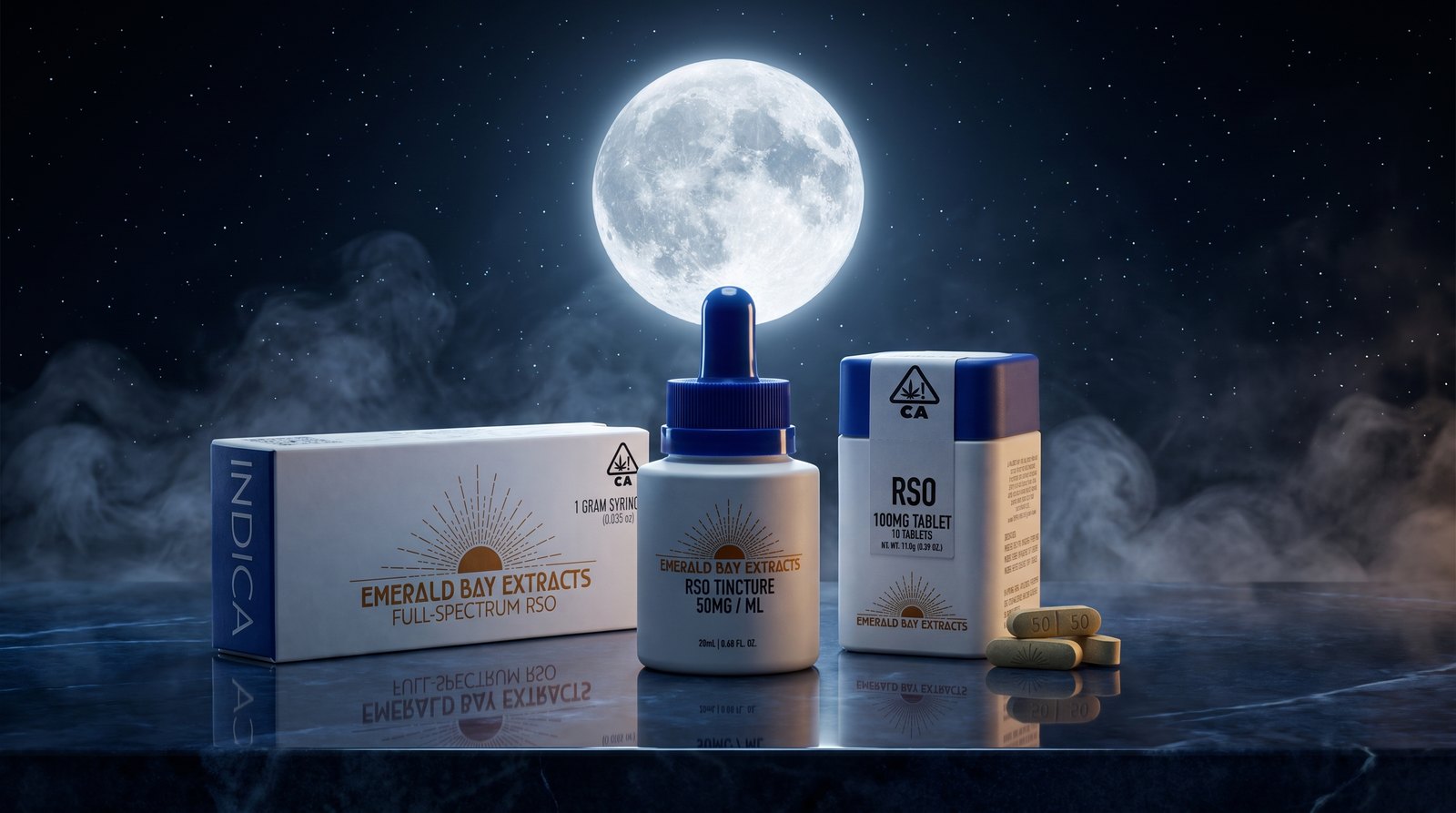
First-pass metabolism and the role of 11-OH-THC
Here's the step that makes oral cannabis genuinely different from smoking or vaping. After absorption from the gut, blood doesn't go straight to the rest of your body — it routes through the liver first. This is called first-pass metabolism, and it's where a large share of swallowed THC gets converted before it ever reaches general circulation.
That conversion isn't just loss. The liver turns a meaningful portion of THC into 11-hydroxy-THC (11-OH-THC), a metabolite that is itself active and readily crosses into the brain. According to PubMed, a clinical pharmacokinetics review in Clinical Pharmacokinetics describes how, after oral dosing, psychotropic effects set in with a delay of roughly 30 to 90 minutes, peak around 2 to 3 hours, and last considerably longer than inhaled cannabis — and notes that far more 11-OH-THC is formed after swallowing than after inhaling (DOI). In other words, the slow onset and the long, steady plateau that oral RSO is known for are not a quirk of the product. They're the signature of the liver doing its work.
Individual variation — your liver is not the average liver
If first-pass metabolism explains the general shape of the curve, your own biology explains why your curve isn't your neighbor's. The enzymes that process THC — primarily the cytochrome P450 enzymes CYP2C9 and CYP3A4 — vary from person to person, partly because of genetics.
According to PubMed, a toxicogenetic analysis in the International Journal of Legal Medicine found that common variants in the CYP2C9 gene were associated with measurable differences in how THC and its metabolites appeared in people's blood (DOI). Two people can take an identical dose and process it at noticeably different speeds. Layer on top of that the broader variability researchers consistently report for oral cannabis: a systematic review of oral THC pharmacokinetics in Medicina concluded that oral THC has a "highly variable" pharmacokinetic profile that differs between formulations and shows delayed, unpredictable peak concentrations compared with other routes (DOI). Body composition, recent food, hydration, metabolism, tolerance, and which other medications you take all push the timing around. This is the real reason there's a range instead of a number.
Oral versus inhaled — two different profiles
It helps to see oral RSO next to its opposite. Inhaled cannabis reaches the bloodstream through the lungs almost immediately: peak blood levels arrive within minutes, effects begin within seconds to a few minutes, and the whole experience tapers off within a couple of hours. According to PubMed, the cannabinoid pharmacokinetics literature — including work co-authored at the U.S. National Institute on Drug Abuse (NIH) documenting how route of administration shapes cannabinoid blood profiles (DOI) — describes inhalation as fast-in, fast-out.
Oral administration produces the opposite profile: slower onset, later peak, and considerably longer duration, largely because of first-pass metabolism and the extended release of cannabinoids from the GI tract. Neither is "better." They're different tools. If you want predictable, longer-lasting, steady support — the kind many people use for nighttime or for staying comfortable through the day — the oral curve is the point, not a downside.
What this means for dosing
The single most useful consequence of all this biology is also the oldest piece of cannabis advice: start low and go slow. Because oral onset is delayed and variable, the most common mistake is redosing too early — taking more at the 45-minute mark because "nothing's happening," then feeling the first and second doses arrive together two hours later.
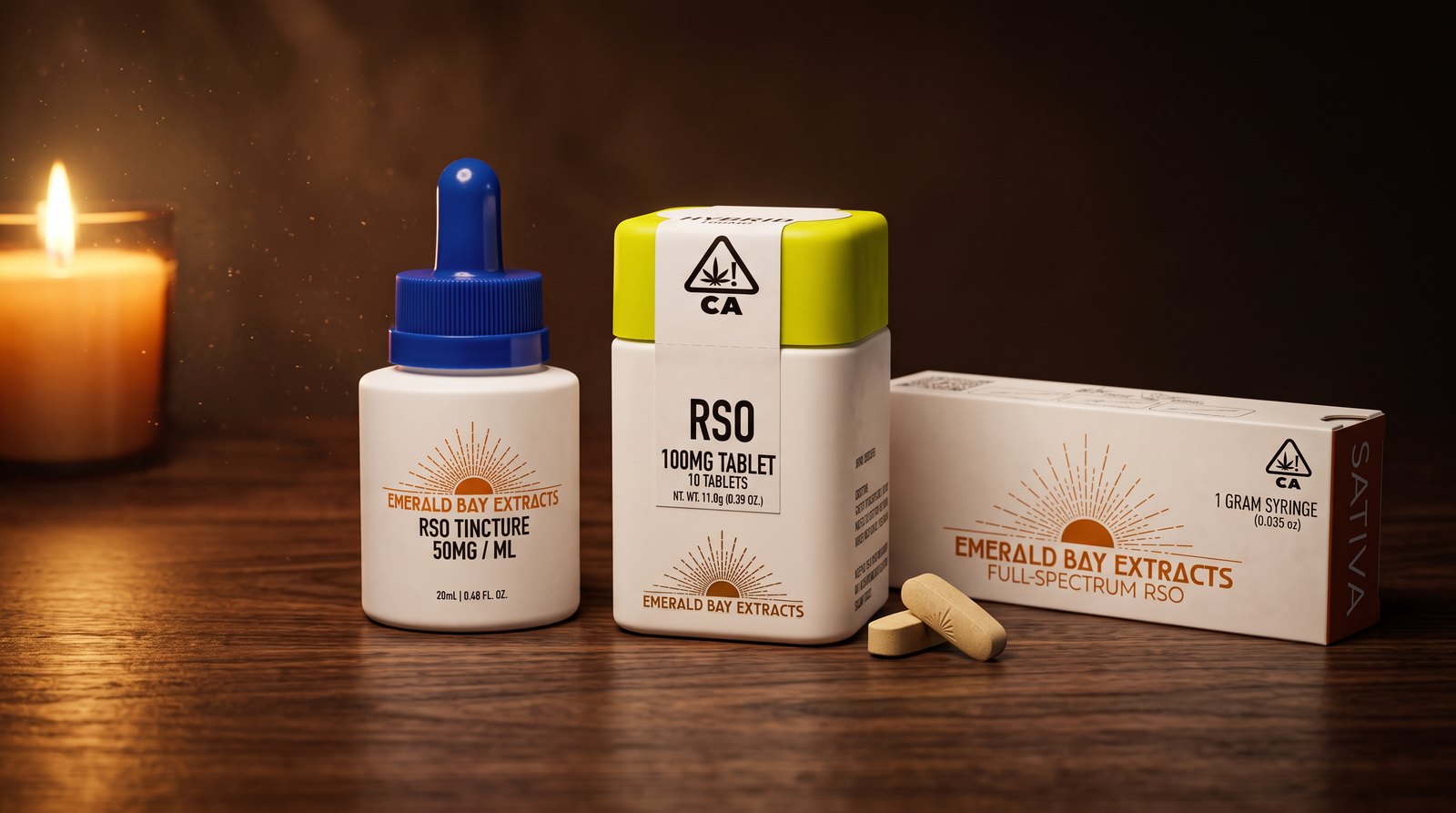
The honest move is to give a dose a full window — generally a couple of hours — before deciding it wasn't enough. And it's worth being precise about one common misconception: more THC doesn't make your stomach empty faster or your liver process things more quickly. A bigger dose can mean stronger or longer effects, but it does not reliably make onset faster. Timing is governed by your physiology, not by the number of milligrams.
What this means for you
If you're new to oral cannabis, plan around the window rather than fighting it. Take your dose when you have a few unhurried hours ahead. Notice whether you took it on an empty or full stomach, and whether that meal had any fat in it — both shift the experience. Keep a simple mental note of what a given dose felt like and when, so your next decision is informed by your body rather than by a stranger's.
This article is educational and doesn't provide medical or dosing advice. Cannabinoid pharmacokinetics research is still emerging, much of it is drawn from oral THC and cannabis studies rather than RSO specifically, and individual responses vary widely. Cannabis laws differ by location, age restrictions apply (21+), and cannabinoids can interact with other medications. If you're considering cannabis for a medical condition — especially if you are pregnant, nursing, or taking other medications — please discuss it with a healthcare provider who knows your full history.
The reframe
It's tempting to want a stopwatch answer, and to treat the lack of one as a flaw. It isn't. Science gives us frameworks and ranges, but it can't predict the exact minute you'll feel effects on any given day — because your stomach, your liver, your genetics, and your last meal are all part of the equation. That variability is a feature of human biology, not a bug. Once you understand where the time goes, the wide window stops being mysterious and starts being something you can work with.
EBE's RSO tablets are scored for splitting — into halves or quarters — so you can start low, give the window time, and titrate to your own biology rather than guessing. Explore the tablet collection →
Sources
- Saals BADF, et al. "A high-fat meal significantly impacts the bioavailability and biphasic absorption of cannabidiol (CBD) from a CBD-rich extract." Sci Rep. 2025. PMC11779803 · DOI
- Grotenhermen F. "Pharmacokinetics and pharmacodynamics of cannabinoids." Clin Pharmacokinet. 2003. PubMed · DOI
- Poyatos L, et al. "Oral Administration of Cannabis and Δ-9-THC Preparations: A Systematic Review." Medicina. 2020. PMC7353904 · DOI
- Gasse A, et al. "Toxicogenetic analysis of Δ9-THC-metabolizing enzymes." Int J Legal Med. 2020. PMC7578149 · DOI
- Lee D, Huestis MA. "Current knowledge on cannabinoids in oral fluid." (NIH/NIDA) Drug Test Anal. 2013. PMC4532432 · DOI