Using RSO for Rheumatoid Arthritis
Rheumatoid arthritis (RA) affects approximately 18 million people around the world, including 1.5 million US adults. This chronic autoimmune disease primarily targets the joints, causing painful inflammation and long-term health issues if left untreated, including damage to the joints, swelling, stiffness, and pain. Joint damage over time can lead to bone deformity and erosion, significantly affecting movement and causing extreme discomfort.
Conventional treatments can help, but they don’t work for everyone. They’re also associated with some serious side effects and can cause health damage when used for long periods of time. This has led to growing interest in alternative options to manage RA symptoms — and cannabis has stepped into the spotlight with some promising potential. Using Rick Simpson Oil (RSO) for rheumatoid arthritis is said to be beneficial, thanks to its high potency and high concentration of beneficial cannabis compounds like cannabinoids and terpenes.
Here we’ll take a deep look at how RSO may effectively alleviate symptoms of rheumatoid arthritis. You’ll learn what RSO is, how it works, and its potential benefits for RA. We’ll also explore what the latest research says, as well as different RSO products and how to use them. In the end, you’ll be able to determine if RSO is the best cannabis-based option for your needs.
What is RSO?
RSO is a highly concentrated cannabis extract rich in beneficial cannabis compounds that’s widely recognized for its potent therapeutic potential. At Emerald Bay, our RSO is created from food-grade ethanol chilled to an exact proprietary temperature that creates a “tincture,” which then goes through a series of heating, cooling, and vacuum-suction processes that pull out cannabinoids, terpenes, and other beneficial compounds and remove undesirable cannabis substances.
This results in an extremely pure form of dark, viscous cannabis oil in its acidic form. To convert acidic cannabinoids in the extract into their active form, it’s heated to specific temperatures determined by its chemical composition. Known as decarboxylation, this process turns cannabinoid acids into their active, bioavailable counterparts — such as THCA to THC, CBDA to CBD, and CBGA to CBG. This allows our products to be consumed orally and have an active effect.
The biggest thing that sets RSO apart from other cannabis products is its high concentration of cannabinoids and terpenes. It’s considered one of the most (if not the most) potent extracts that exists, densely packed with the full spectrum of cannabinoids (including THC, CBD, CBC, etc) and terpenes. Rich in beneficial cannabis compounds that contribute to the entourage effect, a widely accepted theory that cannabis compounds work synergistically together to provide an enhanced therapeutic effect.
The rich profile of cannabinoids and terpenes in RSO makes it a popular product with medical cannabis patients, particularly those with serious medical conditions. This full-spectrum profile also makes RSO especially attractive to individuals interested in powerful, natural relief from conditions like rheumatoid arthritis.
What is Rheumatoid Arthritis?
Rheumatoid arthritis is an autoimmune disorder that happens when the immune system attacks the lining of the membranes surrounding the joints, which is known as the synovium. Ultimately, this triggers an inflammatory response, leading to joint pain, swelling, and stiffness. Over time, this chronic inflammation caused by RA can cause irreversible joint damage and deformities.
RA most commonly affects the hands, wrists, knees, and feet, causing mild to extreme discomfort and physical pain. People with RA tend to suffer from fatigue, mobility issues, and emotional distress. The exact cause of RA is still unknown, but it’s believed to stem from a combination of genetic and environmental factors.
Traditional treatments are primarily used to reduce inflammation and tame the overactive response of the immune system. The most common treatments include immunosuppressants, steroids, and biologics, which can help manage inflammation and pain and are effective for many individuals with RA. They don’t always work for everyone, though, and can cause serious side effects that reduce quality of life.
This has led to increased interest in alternative treatments to manage the pain and discomfort RA patients experience, with promising research on the efficacy of cannabinoids to reduce pain and inflammation leading to a surge in the number of people interested in using cannabis for RA support.
RSO May Help with Rheumatoid Arthritis
With a large body of research supporting the anti-inflammatory, analgesic, and immunomodulating properties of cannabis, highly concentrated cannabis products like RSO that are rich in beneficial compounds like cannabinoids and terpenes could offer relief for RA patients. Here’s how:
1. Potent Anti-inflammatory Potential
Several studies demonstrate the anti-inflammatory effects of cannabinoids, with THC, CBD, and CBG specifically containing powerful effects on inflammation. RSO contains particularly high concentrations of cannabinoids, meaning it may have an especially powerful effect on inflammation caused by RA.
A 2021 review examined the effects of cannabinoids, including THC, CBD, and CBG, on the production of cytokines, proteins that play a huge role in the inflammatory response. It found that CBD, CBG, and CBD+THC have a powerful anti-inflammatory effect, reducing pro-inflammatory cytokines and increasing anti-inflammatory cytokines. While THC used alone didn’t reduce pro-inflammatory or increase anti-inflammatory cytokines, it did show to reduce neuropathic pain.
Considering RSO’s high concentration of cannabinoids, products rich in these cannabinoids — such as CBG RSO Tablets, 1:1 CBD/THC RSO Syringes, and CBD RSO Tinctures — could provide a powerful anti-inflammatory effect on RA.
2. Powerful Pain Relieving Properties
There’s research to suggest THC’s binding affinity to CB1 and CB2 receptors in the body — which are involved in pain modulation and immune system regulation — helps reduce pain, including inflammatory and neuropathic pain. This makes RSO’s high THC content particularly promising to help reduce RA pain.
There are also studies that show CBD may offer relief from pain by its influence on TRPV1 receptors, which play a large role in pain signaling. Its effects are believed to be linked to its efficacy in inhibiting TRPV1 signaling, which researchers suggest demonstrates CBD’s ability to reduce acute and chronic pain. This means RSO CBD products could help alleviate pain and discomfort caused by RA.
3. Neuroprotective Properties that Protect Joints
Cannabinoids are patented neuroprotectants and antioxidants, which help reduce oxidative stress and stabilize neuronal cell membranes. These neuroprotective and antioxidant properties of cannabinoids could help protect joints from further degeneration by preserving the nerves that supply and regulate joint function and reducing inflammation and oxidative damage. This means the high concentration of cannabinoids in RSO could have a particularly powerful neuroprotective effect that helps maintain joint health and reduce further damage.
The Latest Research on Cannabis and Rheumatoid Arthritis
Widespread medical and recreational cannabis legalization has led to a significant increase in scientific research on the plant’s medical potential, including several studies on cannabis for the symptomatic relief of autoimmune diseases like RA, multiple sclerosis (MS), and inflammatory bowel disease (IBD). Recent research reveals some promising insights into how cannabis could help manage inflammation, potentially improving symptoms in RA patients.
A 2024 study explored the effects of cannabinoids on inflammation in patients with psoriasis, an autoimmune disease that causes thick red, scaly patches to develop on the skin. It found that cannabinoids like THC and CBD reduced the production of pro-inflammatory cytokines — which research shows play a huge role in rheumatoid arthritis. Ultimately, this means cannabinoid-rich products like RSO could help manage RA symptoms. Researchers of the 2024 study noted that cannabis treatments seem to be especially effective for pain reduction and improved joint function.
In a review on cannabis and rheumatoid arthritis published in late 2023, researchers found “promising results” of cannabinoids’ anti-arthritic properties, including psychoactive cannabinoids like THC and non-psychoactive cannabinoids like CBD. They noted it's the anti-inflammatory effects of cannabinoids that’s responsible — including inhibiting the production of pro-inflammatory cytokines and nitric oxide, as well as increasing synovial fibroblasts, which help maintain joint health and function. Researchers also mentioned recent clinical trials on cannabis and pain showed that cannabis treatments were effective for managing MS and chronic RA pain.
A 2024 patient survey on patient-reported outcomes of the effects of cannabis on pain, stiffness, and fatigue in rheumatoid and psoriatic arthritis showed some promising results. Patients reported “a substantial reduction in pain severity post-taking cannabis products compared to baseline levels.” A 2023 survey of Canadian RA patients found medical cannabis use is double that of the general population and more than 78% of medical cannabis users report that cannabis was at least somewhat effective.
Using RSO for Rheumatoid Arthritis
Keep in mind that RSO is extremely potent. This means if you’re interested in using RSO to manage RA, it’s highly recommended to start with a low dose and slowly increase it until you experience the effects you desire. The following are a few tips to get you started.
Determine the Best Product for Your Needs
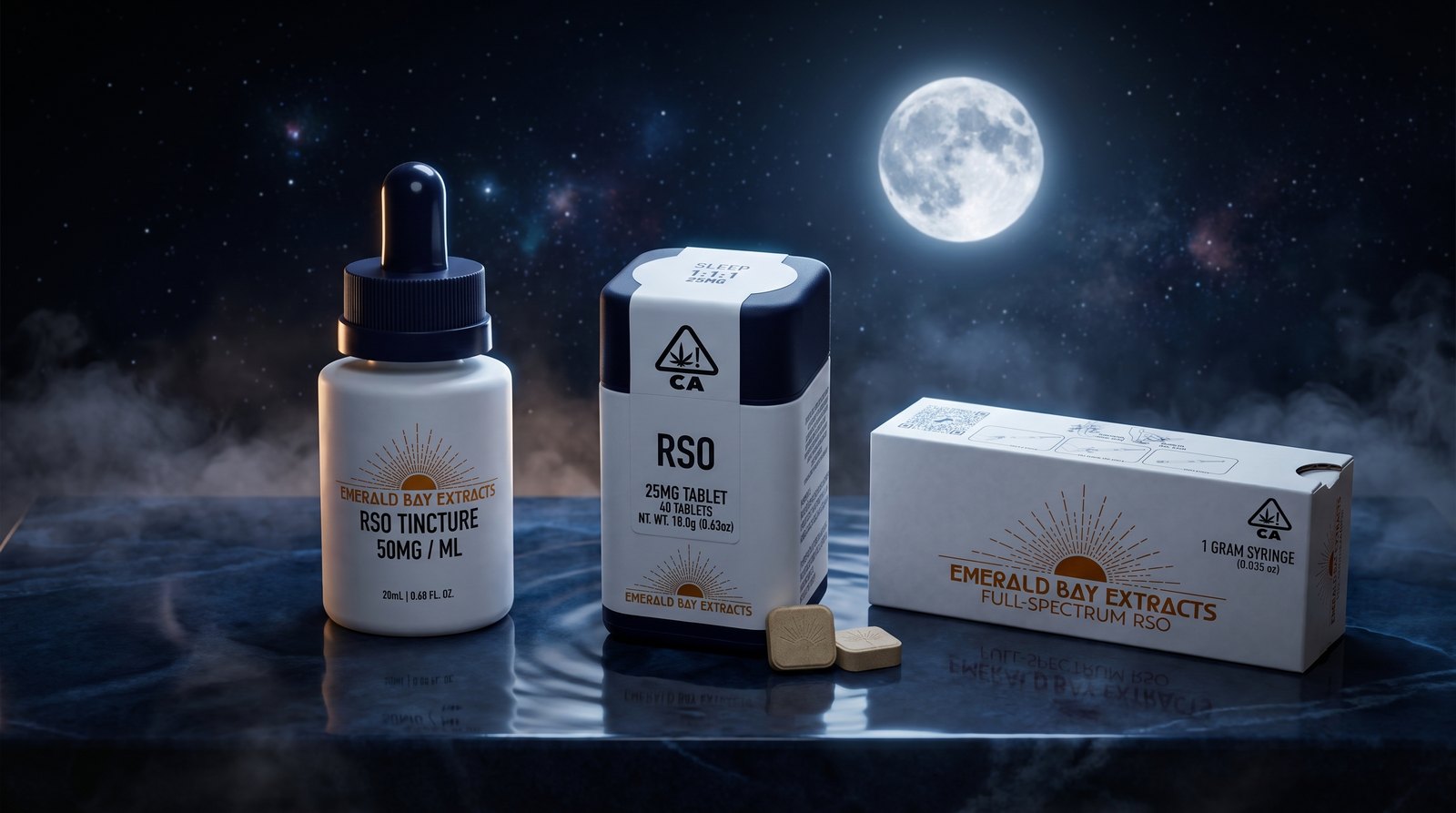
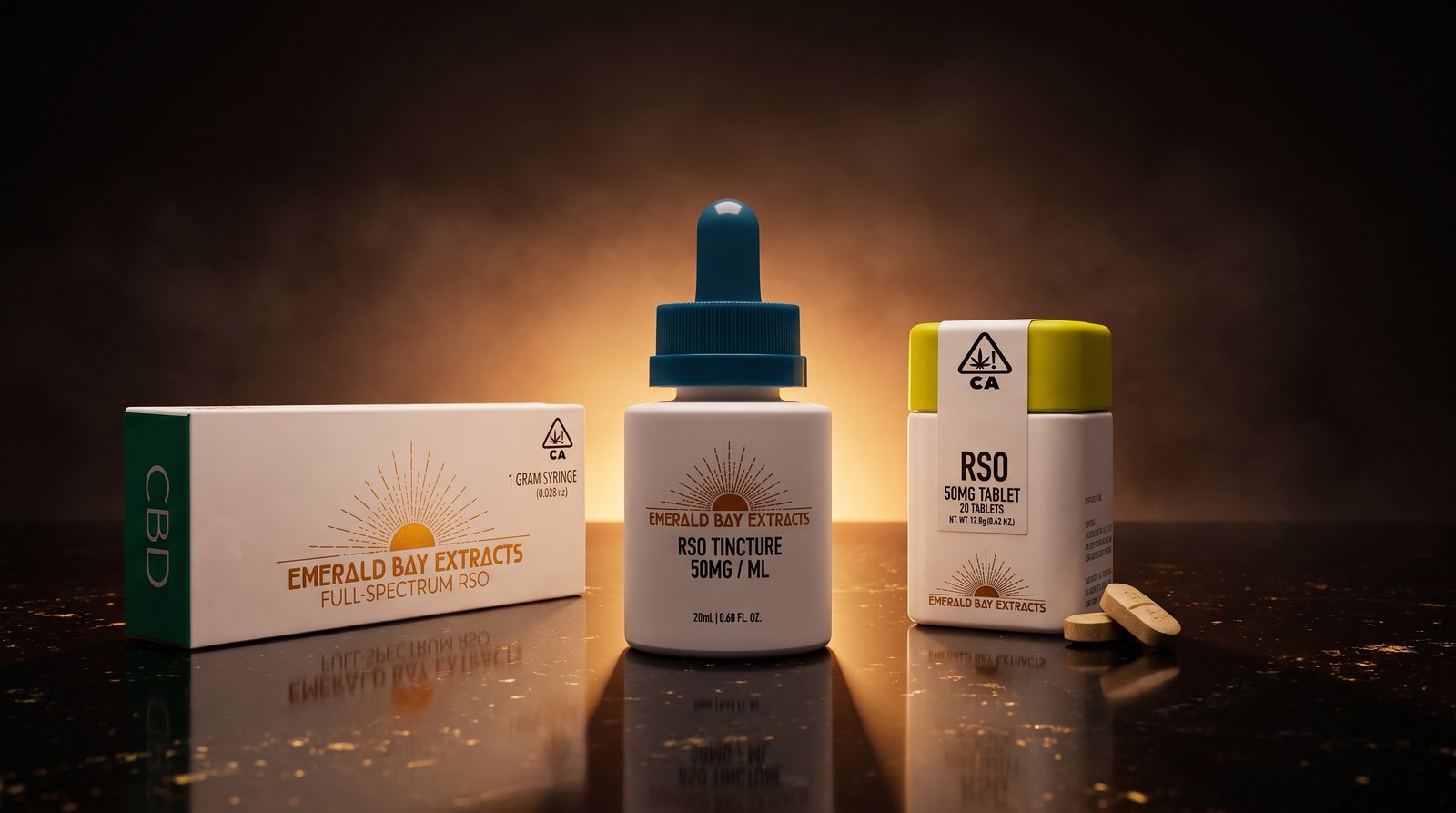
At Emerald Bay, we understand different patients have different needs, which is why we offer a variety of RSO products — including syringes, tablets, and tinctures. Each has its own benefits and can be used in a variety of ways, depending on your personal preference and how severe your symptoms are.
Daytime vs. Nighttime Use
Whether you’re looking for relief during the day or an RSO product that can help reduce pain and help you get a good night’s sleep, there are plenty of options to choose from. All of our RSO products are strain-specific, including energizing and uplifting sativas for daytime relief and relaxing indica products known for sedative-like effects. Our Berry Pie RSO Tablets, for example, are a sativa-dominant hybrid option perfect for daytime relief. This strain is known for its uplifting effects and is commonly used medically to relieve chronic fatigue and chronic pain. On the other hand, Grape Fog RSO Tablets are an indica option known to soothe pain and promote a good night’s sleep.
Consider Microdosing RSO Throughout the Day
Microdosing involves taking very small amounts of RSO at regular intervals throughout the day. If you’re new to RSO, microdosing is a great way to experience relief without being overwhelmed with intense psychoactive effects. Whether it’s taking half of a tablet, a drop of RSO from a syringe, or a quarter or less of a dropperful from a tincture, microdosing is an excellent introduction when using RSO for rheumatoid arthritis.
Risks and Considerations
Like all potent treatments, RSO comes with potential risks and side effects. Some people may become dizzy, drowsy, or experience mental fog, especially if they’re new to cannabis. Individuals inexperienced with THC should be mindful of the psychoactive effects and start with small doses.
It’s recommended to talk with your healthcare provider before taking RSO, especially if you take immunosuppressive medications or other treatments that could potentially interact with cannabinoids. Always make sure RSO is purchased from a reputable source and is third-party lab-tested to ensure purity and potency.
Final Thoughts
While research is still in its early stages, the potential of RSO for managing rheumatoid arthritis is promising. With several studies demonstrating the anti-inflammatory, pain-relieving, and neuroprotective effects of cannabis, RSO’s rich concentration of beneficial cannabis compounds could offer significant relief for RA patients looking for an alternative or complementary treatment.
If you’re considering RSO for rheumatoid arthritis, it's important to talk with a healthcare provider with knowledge about cannabis therapies. As cannabinoid research continues to expand, the future of cannabinoid-based treatments like RSO for RA holds significant potential.