Can RSO help with mood, stress or anxiety? It's one of the most common reasons people pick up a full-spectrum cannabis product, and one of the hardest to answer simply. Some people find cannabis steadies them. Others find it makes their anxiety worse. Often it's the same person on a different dose.
Research on cannabinoids and mood is early and mixed. Low doses of THC have reduced stress reactions in lab studies, while higher doses tend to increase anxiety. CBD and CBG have shown modest calming effects in small, short human studies. No cannabis product, RSO included, is an established treatment for anxiety or depression, and dose matters more than strain name.
If you skim and leave, take that with you. The rest of this article explains why THC cuts both ways, what the human studies on CBD and CBG actually measured, how full-spectrum oils fit in, and when to talk to someone instead of experimenting alone.
Why cannabis and mood are connected
The endocannabinoid system (ECS) is one of the body's main stress-regulation networks. Your own endocannabinoids, especially anandamide and 2-AG, help switch off the stress response once a threat has passed, and CB1 receptors are dense in brain regions that process fear and emotion, including the amygdala and prefrontal cortex. Plant cannabinoids act on parts of this same system, which is why they can change how stress and anxiety feel.
The catch is that the system is finely balanced. Nudging it a little in one direction can feel calming. Pushing harder can tip it the other way.
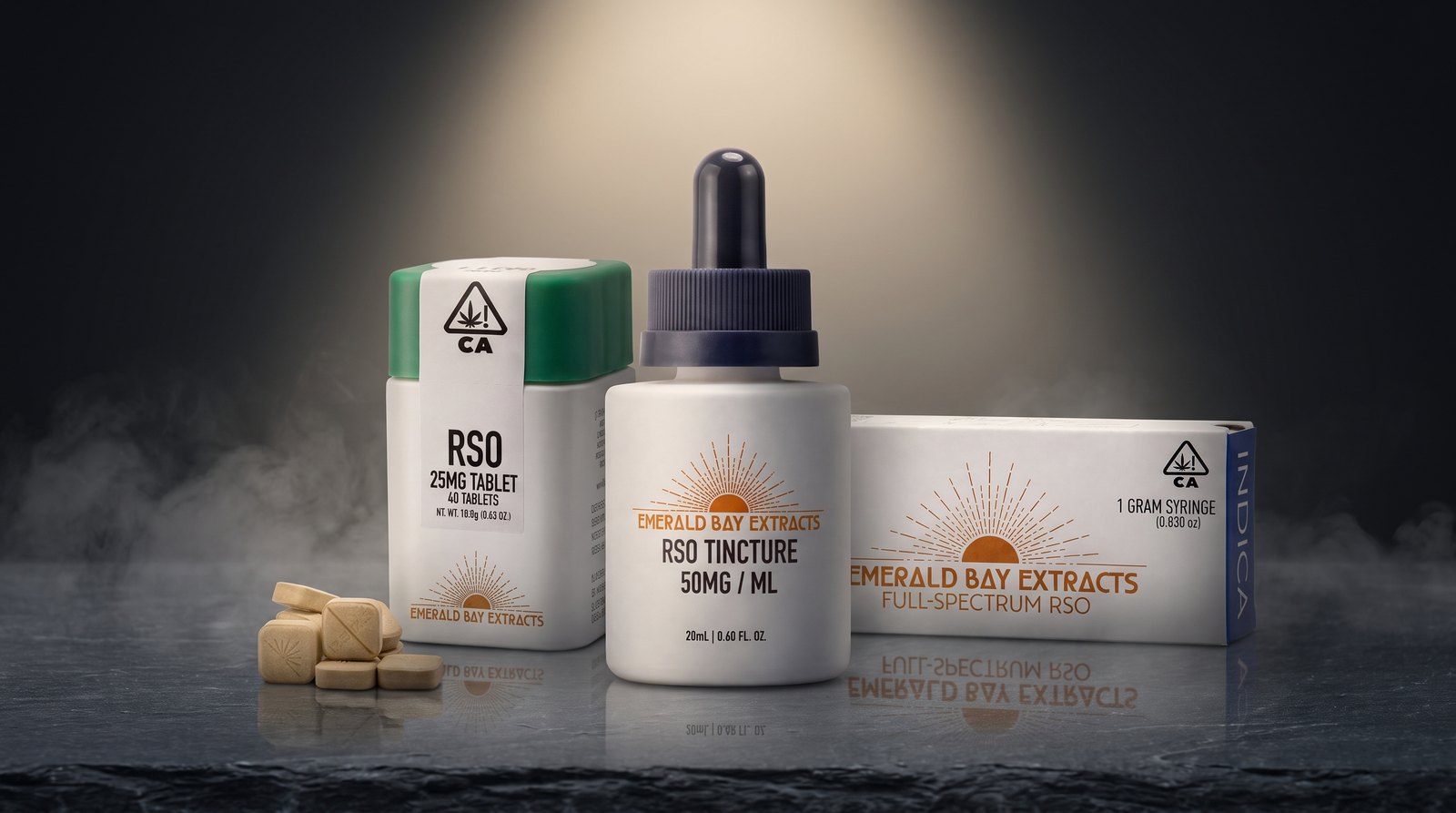
THC: why dose decides the direction
THC has what researchers call a biphasic effect on anxiety. In a placebo-controlled study of THC during a social stress test, a low dose (7.5 mg) reduced how distressing participants found the task, while a higher dose (12.5 mg) tended to increase anxiety and negative mood. The difference between those two doses is smaller than the gap between many products on a dispensary shelf.
That matters for RSO in particular. Most RSO is THC-dominant and concentrated, and oral products take 30 minutes to 2 hours to kick in, so it's easy to take a second dose before the first has fully arrived. When people describe a bad experience with an edible or oil, it's usually this: a dose that was right at 45 minutes and far too much at 2 hours. If you want to understand the timing, our guide to how long RSO takes to kick in walks through it.
CBD: the most-studied calming cannabinoid
CBD isn't intoxicating, and it has the largest research base of any cannabinoid for anxiety. A 2015 review in Neurotherapeutics concluded that preclinical evidence strongly supports CBD as a candidate for anxiety disorders, while noting that human data were limited mostly to single-dose studies. In one of those studies, a single 600 mg dose of CBD reduced anxiety during a simulated public-speaking test in people with social anxiety disorder.
In everyday clinical practice, a case series in The Permanente Journal reported that most patients' anxiety scores fell during the first month of CBD use, though the effect wasn't sustained in everyone, and there was no control group. CBD also appears to blunt THC-induced paranoia in a controlled study, which is one reason balanced THC:CBD products feel different from THC-only ones for many people.
The bigger picture is more cautious. A systematic review and meta-analysis of randomized trials of cannabinoids across psychiatric disorders found only limited evidence of short-term benefit and no evidence for longer-term effectiveness.
CBG: early human data
CBG (cannabigerol) is non-intoxicating and has only recently been tested in people. In a 2024 double-blind, placebo-controlled crossover trial of 34 healthy adults, a single 20 mg dose of CBG was associated with lower self-reported anxiety and stress compared with placebo, with no measurable impairment. It's one small, single-dose study in people without an anxiety diagnosis. We also ran a placebo-controlled EEG study of our White CBG tablet; you can read what the brain data showed and where its limits are.
Full-spectrum oils, terpenes and strain names
RSO is a full-spectrum oil: it keeps the plant's mix of cannabinoids and terpenes rather than isolating THC. The idea that these compounds shape one another's effects (the "entourage effect") is plausible and actively studied. One controlled study found that the terpene limonene reduced THC-induced anxiety when the two were vaporized together. Beyond a few studies like that, the human evidence is thin, and it hasn't been tested in RSO.
Strain names deserve the same caution. Labels such as "uplifting" or "calming" come from user reports and terpene profiles, not mood trials, and the same strain can vary between growers. The ratio of THC to CBD or CBG on the lab report usually tells you more than the name does. EBE's strain-specific tablets list their cannabinoid content per tablet and are scored for splitting, which makes it easier to start with a small amount; our White CBG line is the non-intoxicating option.
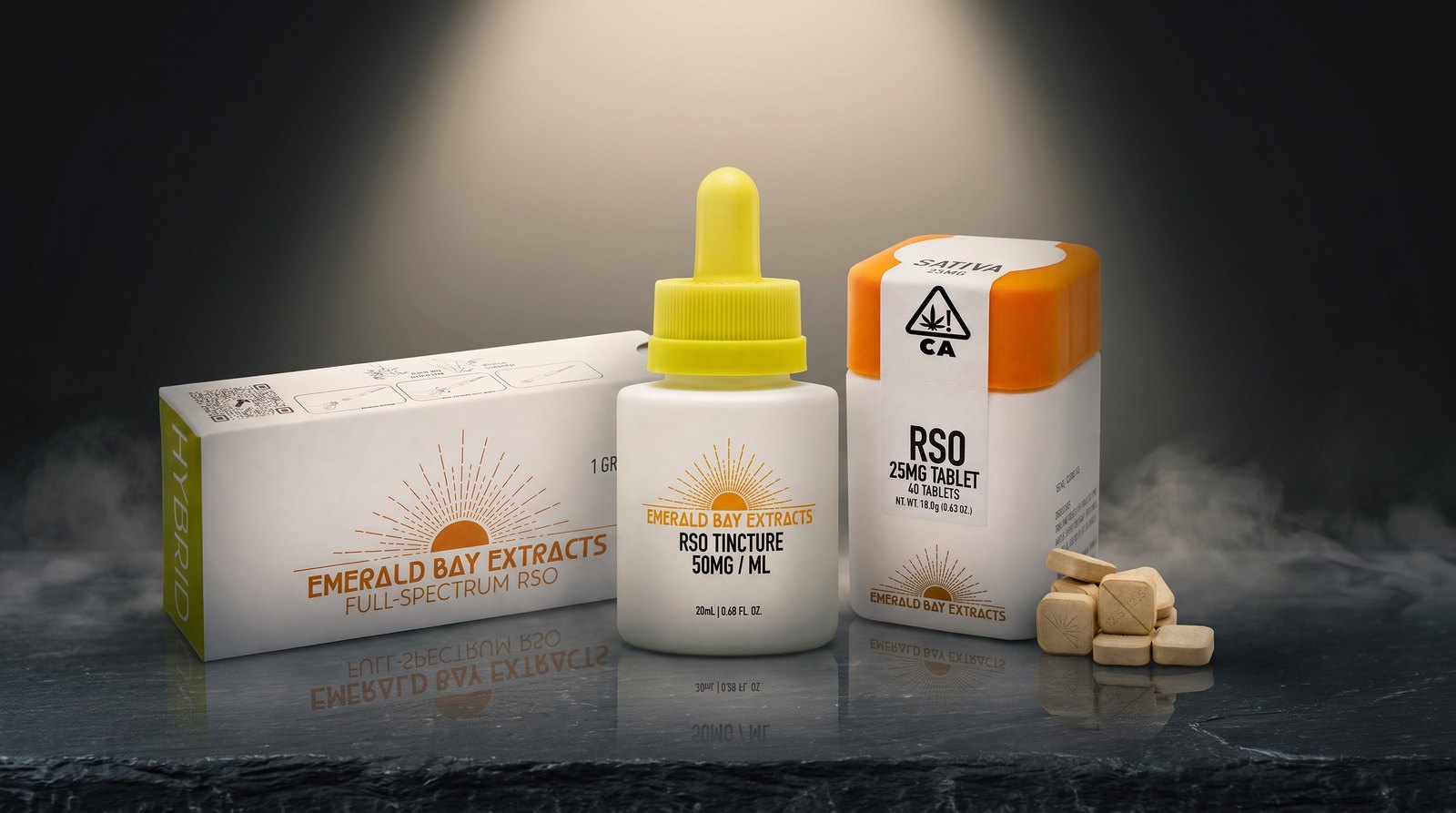
When to talk to someone first
Everyday stress and a diagnosed anxiety or mood disorder are different things. If anxiety or low mood is affecting your sleep, work or relationships, or if you've had thoughts of self-harm, please talk to a clinician. Effective treatments exist, including therapy and medication, with far stronger evidence than cannabis.
It's also worth knowing the risks. Regular heavy THC use is linked to dependence, and for some people it can worsen anxiety or depression over time. People with a personal or family history of psychosis or bipolar disorder should be especially careful with THC. And cannabinoids can interact with antidepressants, anti-anxiety medications and sleep aids.
This article is educational and doesn't provide medical or dosing advice. Cannabinoid research in mood and anxiety is still emerging, findings vary, and individual responses differ widely. Nothing here describes cannabis as a treatment for anxiety, depression or any mental-health condition. Cannabis laws differ by location, age restrictions apply (21+), and cannabinoids can interact with other medications. If you're considering cannabis for a medical condition — especially if you are pregnant, nursing, or taking other medications — please discuss it with a healthcare provider who knows your full history.
Frequently asked questions
Is RSO good for anxiety?
There are no studies of RSO for anxiety. Because most RSO is high in THC, it can increase anxiety at higher doses, especially in people who are new to cannabis. Products with more CBD or CBG relative to THC have a stronger (though still limited) research base for calming effects.
Does THC make anxiety worse?
It can. Controlled studies show THC tends to reduce stress at low doses and increase anxiety at higher ones, and the threshold varies from person to person.
Is CBD or CBG better for stress?
CBD has more research behind it, including several small human trials. CBG has one small placebo-controlled trial showing lower anxiety and stress in healthy adults. Neither has been shown to treat an anxiety disorder.
Can I take cannabis with antidepressants?
Cannabinoids are processed by liver enzymes that also handle many antidepressants and anti-anxiety medications, so interactions are possible. Ask your prescriber or pharmacist before combining them.
The bigger picture
The most useful way to think about cannabis and mood isn't "which product fixes this?" It's "what is this compound doing to a stress system that's already finely tuned?" Seen that way, the research makes sense: small nudges sometimes help, big pushes often backfire, and the non-intoxicating cannabinoids are where the calmer evidence sits. That's a less exciting answer than a top-five list, but it's one you can actually use.