At least 40% of people are affected by sciatica pain at some point in their lives. While relatively common, the shooting pain it refers to that radiates from the lower back or buttocks down the sciatica nerve can be excruciating. It usually goes away on its own with exercise and mild over-the-counter pain meds, but as interest and use of medical cannabis grows, many individuals are turning to cannabis for relief.
RSO is a concentrated, full-spectrum cannabis oil, and its potency has drawn interest from people living with nerve pain. Here we look at what sciatica is, why people think RSO might help, what the research actually shows, how people use it, and the risks to weigh.
Can RSO help with sciatica pain?
Sciatica is a type of neuropathic (nerve) pain, and some research suggests cannabinoids can modestly reduce certain kinds of neuropathic pain. That’s why people are curious about RSO for sciatica. But no clinical trial has tested RSO, or cannabis generally, for sciatica itself, so everything below is drawn from related research.
What is sciatica?
Sciatica refers to pain that occurs in the sciatic nerve, which starts in root fibers of the lower spine and sacral region, which connect to form a nerve that extends from the lower vertebrae and runs down the leg into the foot. Sciatica isn’t a condition in itself, but rather a symptom of issues with the sciatic nerve.
Typically, sciatica manifests as a dull or sharp shooting pain that travels along the path of the sciatic nerve, moving across the lower back and down the leg. The most common causes include irritation or compression of the sciatic nerve, a herniated or bulging disc, spinal stenosis (narrowing of the spinal canal), or previous injury to the lower back or pelvic region.
Symptoms of sciatica often include:
- Sharp, shooting pain that starts in the lower back and goes down the leg, described as an electric shock
- Tingly or numb sensation in the leg or foot that feels like pins and needles
- Muscle weakness on the side of the body affected
- Increased pain when sitting, moving, sneezing, or coughing
- Severe to extreme pain that can come and go or be constant
Traditional OTC medications like NSAIDs and muscle relaxants can help offer some relief, but they don’t have a direct effect on nerve pain. Their long-term use can also lead to other potential health problems, including gastrointestinal, kidney, or cardiovascular issues.
What is RSO?
Rick Simpson Oil (RSO) is a potent cannabis extract known for its rich concentration of cannabinoids and terpenes. It is considered one of the most potent cannabis products on the market. It has high THC concentration and a powerful full-spectrum profile that contains a wide array of cannabinoids, terpenes, and flavonoids, and is predominantly used by medical cannabis patients interested in powerful effects that provide lasting relief.
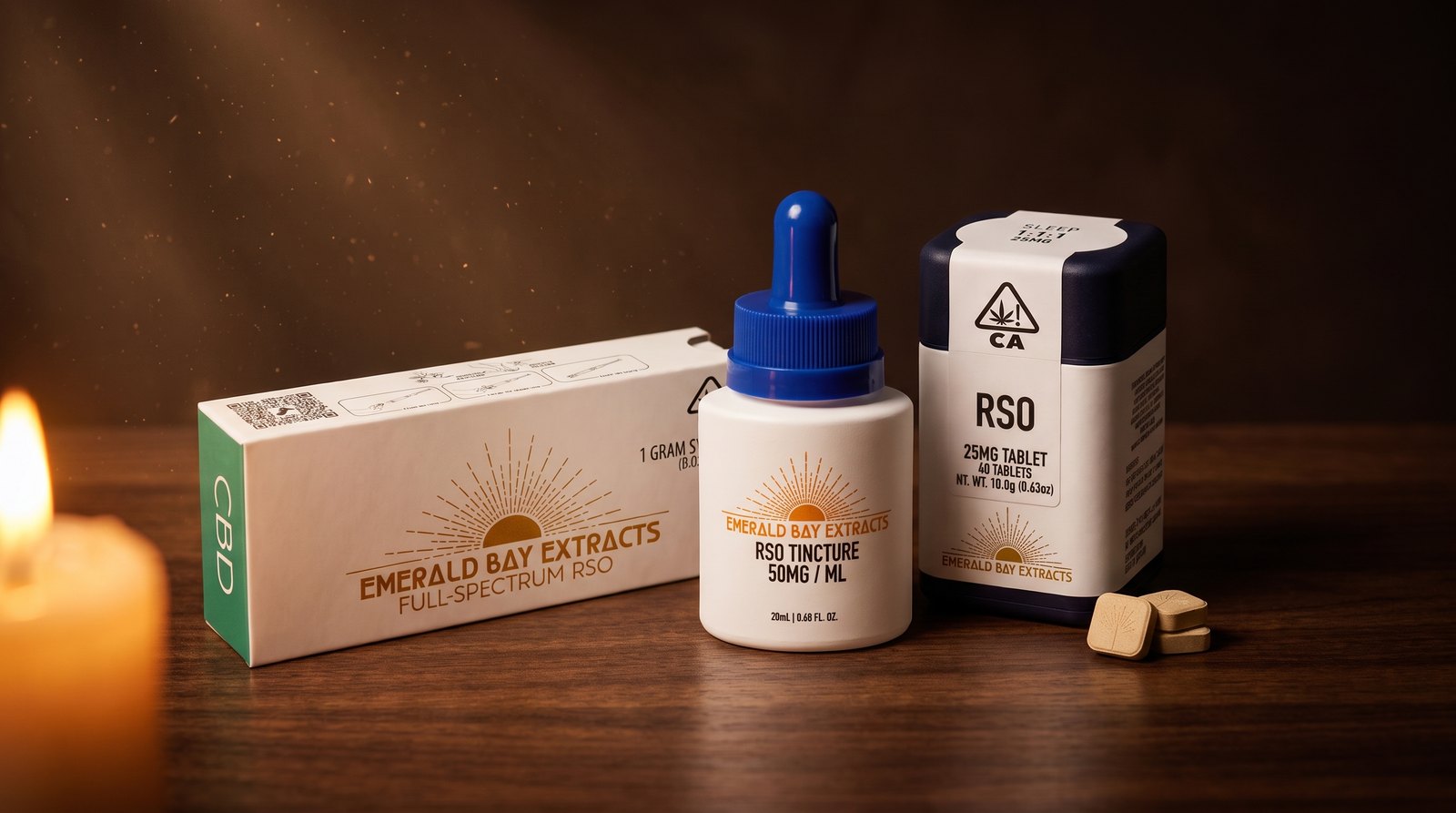
Created using an ethanol extraction method that results in a thick, dark oil, it’s more concentrated than other cannabis products, including other extracts and tinctures, and is typically used in small doses. Common products include RSO syringes and tablets. You can also find select brands that sell RSO tinctures, offering innovative solutions to meet the needs of different consumers.
Why do people think RSO could help with sciatica?
Cannabis has been celebrated for its pain-relieving properties for centuries. Research suggests this is related to its interaction with the body’s endocannabinoid system (ECS), a complex modulatory system involved in many physiological processes — including pain perception and nerve function, both of which play a huge role in sciatica. Below are the three reasons people most often give for trying RSO for sciatica, and what the evidence behind each looks like.
1. Could cannabinoids calm nerve inflammation?
Nerve inflammation plays a part in sciatica, and cannabinoids such as CBD, THC and CBG have shown anti-inflammatory activity, mostly in laboratory and animal studies. RSO also contains terpenes, some of which show anti-inflammatory effects in the lab. None of this has been tested in people with sciatica.
Myrcene, linalool, caryophyllene and pinene are terpenes studied for anti-inflammatory activity, and they occur in strains such as Blue Dream. Whether the terpene content of an oral RSO product changes how it affects nerve pain hasn’t been studied.
White CBG RSO 25mg Tablets are a non-intoxicating option some people choose. CBG has shown anti-inflammatory activity in laboratory research, but it hasn’t been studied for sciatica.
2. Do cannabinoids protect nerves?
Cannabinoids show antioxidant and neuroprotective activity in laboratory research; the U.S. government even holds a patent on cannabinoids as antioxidants and neuroprotectants. Chronic nerve compression can cause lasting damage, so the idea is appealing, but whether cannabinoids protect a compressed sciatic nerve in people hasn’t been tested.
3. Does THC reduce nerve pain?
Sciatica pain ranges from mild to severe enough to make walking hard. THC has been studied for several kinds of pain, including neuropathic pain, and small trials suggest it can reduce pain ratings for some people, though effects are usually modest and side effects such as dizziness and drowsiness are common.
THC acts on CB1 receptors in the brain and spinal cord, which are involved in how pain signals are processed. That’s why researchers are interested in it for neuropathic pain, which standard pain relievers often don’t control well.
What does the latest research say about cannabis and sciatica?
Research on cannabis and pain is growing. While there’s not a lot of research on cannabis for sciatica specifically, there are recent studies that have explored the connection between cannabis-based medicines and relief from nerve-related pain.
A 2024 study published in Frontiers in Pain Research explored the effects of full-spectrum cannabis oil in patients with spinal cord injury who experience chronic neurological pain. Researchers found people that used cannabis displayed “significant reductions” of neuropathic pain intensity, pain interfering with daily activities, and other issues associated with pain, such as stress, anxiety, depression, and insomnia. Many participants substituted traditional pain meds with cannabis, and over 92% report cannabis helps manage neuropathic pain. This was an observational study, not a placebo-controlled trial, and it wasn’t in people with sciatica.
Another 2024 study examined the role of several different medicinal plants (including cannabis) for their potential to mitigate sciatica-related pain. In animal models, cannabis significantly improved motor function, leading researchers to suggest that dietary supplementation with Cannabis sativa may help speed motor function recovery after nerve compression injuries.
The most relevant human study is small. In a 2018 randomized, placebo-controlled trial of 15 people with chronic radicular pain (the radiating, nerve-root pain typical of sciatica), a single dose of THC under the tongue reduced pain more than placebo, and the relief tracked with reduced connectivity between brain regions that process pain and emotion. It was one dose in 15 people, so it can’t tell us how RSO would work over weeks or months.
How do people use RSO for sciatica pain?
If you’re interested in using RSO for sciatica pain, it’s important to keep in mind that it’s a highly concentrated cannabis extract. This means starting with a very small dose is important — often a piece the size of a grain of rice when taking RSO oil from a syringe — then gradually increase your dose until you experience the effects you want. Our RSO dosage chart lists typical first doses by product.
This "start low and go slow" approach is widely recommended when trying any new cannabis products, including RSO, whether you’re new to cannabis consumption or an experienced user. It helps medical patients and recreational consumers avoid unwanted side effects and determine the best dose that works for their unique needs.
Which RSO products are there?
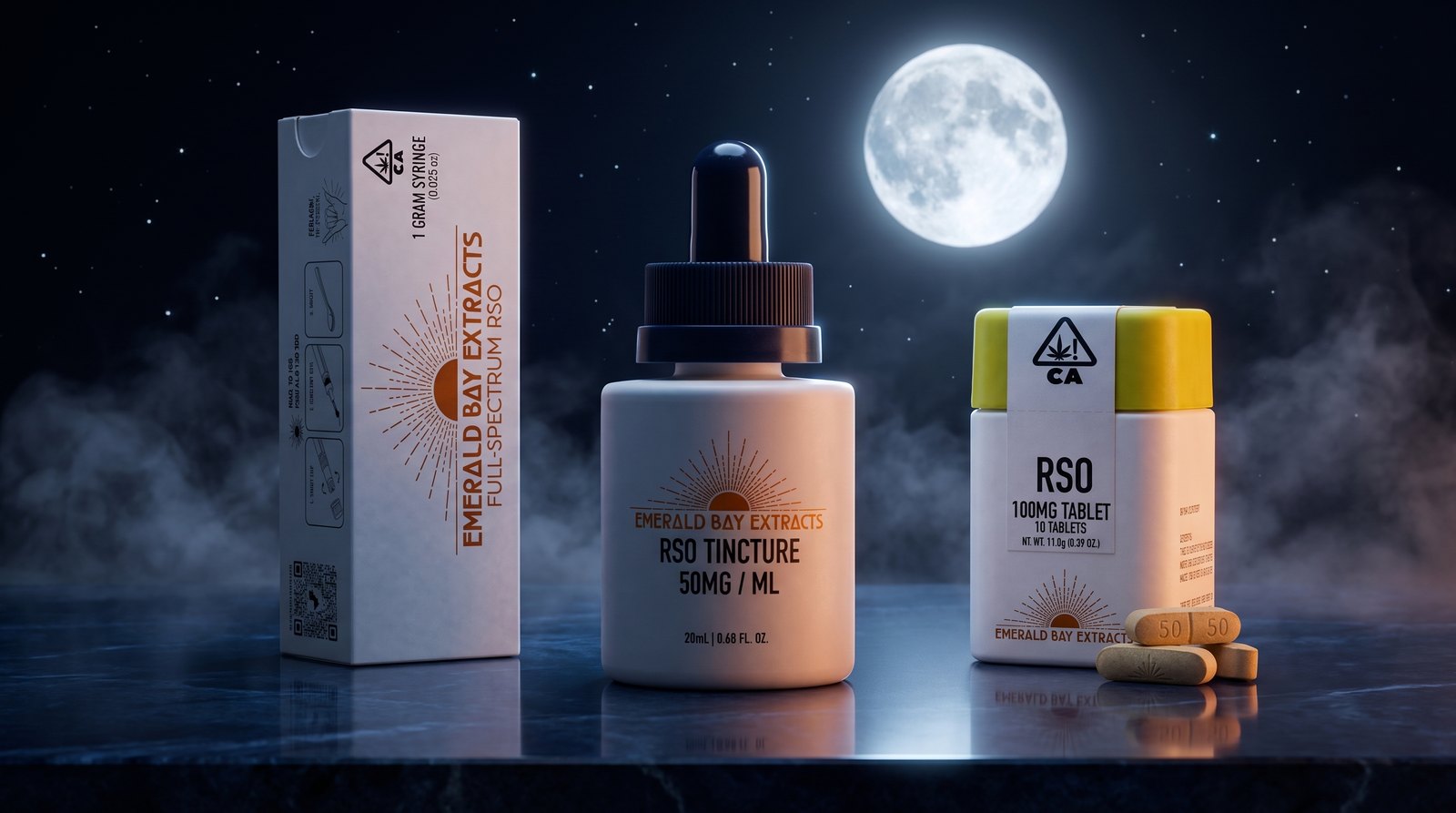
- RSO Syringes — Emerald Bay Extracts RSO syringes are like a syringe used to get a regular shot, only they’re filled with cannabinoid and terpene-rich RSO. Designed to be taken orally in very small amounts, RSO oil delivers potent and long-lasting effects.
- RSO Tablets — Our RSO tablets contain our RSO in a convenient and discreet tablet form. Each contains a perfectly measured serving size, which takes the guesswork out of dosing. They’re also scored, making it easy to adjust your dose as needed.
- RSO Tinctures — Newly added to our line of quality products, RSO tinctures are similar to traditional CBD or THC tinctures that are designed to be taken sublingually, although they’re not as common as RSO syringes and tablets. The biggest difference between regular cannabis tinctures and RSO tinctures is that RSO tinctures are highly concentrated, so a small volume contains more cannabinoids.
| Format | How it’s taken | How the dose is measured | Typical onset |
|---|---|---|---|
| Syringe | Swallowed, or held under the tongue | By eye; often a rice-grain-sized amount to start | 30 minutes to 2 hours |
| Tablet | Swallowed | Fixed milligrams per tablet; scored to split | 30 minutes to 2 hours |
| Tincture | Drops under the tongue, then swallowed | By the drop (mg per ml on the label) | 30 to 90 minutes |
RSO is sold in states with legal medical or adult-use cannabis. Choose products that have been lab tested, so you know the product contains what the label says. Emerald Bay products are sold only at licensed dispensaries in California and New Mexico, never online. Find a store on our store locator.
What are the risks and side effects of RSO?
Whether natural or pharmaceutical, everything taken to support health contains potential risks and side effects to be aware of. Cannabis isn’t any different, especially when using potent products like RSO. The following are a few things to be aware of:
How strong are RSO’s psychoactive effects?
RSO is notorious for delivering super-powerful psychoactive effects. If you’re new to THC, it’s recommended to start low and go slow until you’re comfortable with the intoxicating effects of cannabis — especially those like RSO with a high potency.
What side effects are common?
There are some common adverse effects associated with cannabis use, and RSO’s high potency could enhance these side effects. The most common are dry mouth, dry eyes, and dizziness. New users or individuals sensitive to THC may experience anxiety or paranoia.
Can RSO interact with nerve pain medications?
If you take prescription medications for nerve pain or other health reasons — such as gabapentin, muscle relaxants, or blood thinners — it’s vital to talk with your doctor before using cannabis, as it can negatively impact medications metabolized by the liver.
It’s always recommended to speak with a healthcare provider prior to cannabis use, preferably someone experienced in cannabis. This way, they can help customize your cannabis use, help monitor drug-drug interactions, and work with you to find the best dosage.
So is RSO worth trying for sciatica?
RSO hasn’t been tested for sciatica, and the research on cannabinoids and nerve pain is promising but early: mostly lab studies, observational data and small trials with modest effects. Some people with sciatica find cannabis helpful; others find the side effects outweigh the benefit.
More clinical trials are needed to know whether, and for whom, RSO helps with sciatica. If you're curious about using RSO for sciatica, it's recommended that you talk to a healthcare provider familiar with cannabis therapies.
As medical cannabis research continues to steadily evolve, future trials should clarify whether, and for whom, cannabinoids help with nerve-related pain like sciatica.
Frequently asked questions
Has RSO been studied for sciatica?
No. There are no clinical trials of RSO for sciatica. The evidence comes from studies of THC and cannabis for other kinds of nerve pain, including a small 2018 trial in people with radicular pain, and from lab and animal research.
How much RSO should I start with?
Start very small. With a syringe, people often begin with an amount about the size of a grain of rice, and tablets can be split. Wait at least two hours before taking more. See the RSO dosage chart, and talk with a clinician about your situation.
How long does RSO take to work?
Taken by mouth, RSO usually takes 30 minutes to 2 hours to start working and peaks around 1.5 to 3 hours. Our guide to how long RSO takes to kick in explains why the window is so wide.
Can I take RSO with gabapentin or muscle relaxants?
Check first. Cannabis can add to the drowsiness and dizziness these drugs cause, and cannabinoids can interact with medications processed by the liver. Ask your doctor or pharmacist before combining them.
Is there a non-intoxicating option?
CBG-dominant products such as White CBG tablets aren’t intoxicating. CBG has shown anti-inflammatory activity in lab studies, but it hasn’t been tested for sciatica.
This article is educational and doesn’t provide medical or dosing advice. Cannabinoid research in sciatica and nerve pain is still emerging, findings vary, and individual responses differ widely. Cannabis laws differ by location, age restrictions apply (21+), and cannabinoids can interact with other medications. If you’re considering cannabis for a medical condition — especially if you are pregnant, nursing, or taking other medications — please discuss it with a healthcare provider who knows your full history.