"How do I actually use this thing?" is the most common question we hear about RSO syringes, usually followed by "how much is one dose?" and "why won't the oil come out?" An RSO syringe looks clinical, the oil inside is thick and dark, and the markings on the barrel are small. It's a lot to figure out on the first night.
An RSO syringe is a needle-free oral syringe filled with about 1g of Rick Simpson Oil, a concentrated full-spectrum cannabis extract. To use it, twist off the cap, warm the barrel if the oil is stiff, push out a very small amount (Emerald Bay's label suggests a dose about the size of half a grain of rice), and take it by mouth or mix it into food. Swallowed RSO usually takes 30 minutes to 2 hours to begin working, so wait at least 2 hours before taking more.
That covers the basics. The rest of this guide walks through each step in more detail, explains why the timing is so variable, and answers the questions people ask most often about smoking, dabbing, and storing RSO. It also folds in the step-by-step dosing card that used to live on our separate syringe dosing page.
What is an RSO syringe?
RSO stands for Rick Simpson Oil, named after the Canadian who popularized a whole-plant cannabis oil in the early 2000s. Unlike a distillate, which is refined down to one or two cannabinoids, RSO is a full-extract oil: it keeps THC (or CBD, depending on the strain) along with minor cannabinoids, terpenes, and other plant compounds. You'll also see it called FECO, short for full-extract cannabis oil. An RSO syringe and a Rick Simpson Oil syringe are the same thing.
The syringe is simply the most practical container for an oil this thick. There's no needle. Instead, a nozzle tip dispenses the oil when you press the plunger, and printed markings on the barrel let you measure how much you've pushed out. Emerald Bay syringes hold 1g of full-spectrum, strain-specific RSO and use a glass applicator tip that dispenses a thin, 1mm-wide line of extract, which makes very small doses easier to control.
Because the THC in RSO has already been activated by heat during production (decarboxylated), the oil is ready to take by mouth without cooking. That's also why it's potent: a small amount of oil contains a meaningful dose.
How to open an RSO syringe
Opening the syringe is usually the easy part, but residue can make it tricky after the first use. Here's the sequence for an Emerald Bay syringe:
1. Open the box. Our syringe boxes are child-resistant. Press the button on the side of the box while sliding the inner tray outward, and peel back the label that seals the two sections. The syringe sits in a foam bed; you can keep it there between uses.
2. Remove the cap. Turn the cap counterclockwise to unscrew it. On a new syringe it should come off without much effort.
3. If the cap is stuck, it's almost always dried oil around the tip acting like glue. Warm the cap end in your closed hand for a few minutes, or run it under warm (not hot) water for about 30 seconds, then try again. Avoid pliers or a lighter: too much force can crack the tip, and direct flame can scorch the oil.
How to dose an RSO syringe
This is the step that matters most, and the one where people most often overshoot. Dosing an RSO syringe comes down to reading the markings and starting smaller than you think you need.
Reading the barrel. On Emerald Bay syringes, the full-length tick marks are 0.1ml apart and the half-length marks fall at 0.025ml intervals. For this oil, 1ml is roughly equal to 1g. A new syringe starts at the 1.0 mark; pushing the plunger from 1.0 down to 0.9 dispenses about 0.1g of oil. That is a large amount for most people, which is why the label points to something much smaller.
The half-grain-of-rice dose. Our label suggests beginning with a single drop about the size of half a grain of rice. Depending on the strain, that dose contains roughly 13 to 18mg of THC or CBD, and a 1g syringe holds about 50 doses of that size. You don't have to measure this by the tick marks; it's a visual amount, squeezed slowly onto a fingertip, a spoon, or directly onto food.
If you're new to THC, it's worth knowing that clinical guidance tends to start lower than that. A 2021 consensus of international clinicians suggested that people new to THC begin around 1 to 2.5mg and increase slowly over days, and a widely cited review on cannabis dosing describes the same "start low, go slow" approach. A sliver smaller than half a grain of rice is a reasonable place to begin, and a prescriber or a clinician who knows your history can help you set a starting point. (If precise small doses matter to you, a scored tablet can be easier; we compare the two in RSO syringes vs. tablets.)
Viscosity varies by strain. Some oils are noticeably stickier than others. Our GG4 syringes, for instance, are thick and slow to move, while CBD-dominant oils such as Valentine X or Harlequin GDP tend to flow more easily. If you switch strains, go slowly with the plunger the first time, because an oil that flows freely makes it easy to push out more than you meant to.
How to use an RSO syringe: four ways to take it
Once you've measured your dose, there are four practical ways to take it. None is objectively best; the right one is the one you'll use consistently.
Swallow it directly. Place the oil toward the back of your tongue and swallow, or follow it with a sip of water. RSO is sticky, so the front of the mouth tends to hold onto it.
Hold it under your tongue or against your cheek. Let the oil sit and dissolve for a minute or two before swallowing. Many people like this method, and the lining of the mouth can absorb some cannabinoids. It's worth being precise about what the research shows, though. In a controlled NIH study, an oromucosal cannabis spray and oral THC capsules produced similar blood levels and similar timing, which suggests that much of what you hold in your mouth is eventually swallowed. Expect an onset closer to an edible than to a vape.
Mix it into food. Stir the oil into a spoonful of nut butter, yogurt, a salad dressing, or a sauce. Taking RSO with some fat may matter: animal research found that dietary lipids increased THC and CBD absorption, and a human study of oral CBD found several-fold higher blood levels after a high-fat meal than when fasting. The flip side is consistency: if you take your dose with a big meal one day and on an empty stomach the next, the effect can feel different.
Stir it into a warm drink. Warm tea or milk helps the oil disperse. Keep food and drinks below about 150°F, since higher heat can degrade terpenes and cannabinoids, and the same caution applies when adding RSO to anything you cook.
When you'll feel it, and when to take more
For swallowed cannabis, the research gives us ranges rather than a single number. A classic review of cannabinoid pharmacokinetics describes oral THC as slow and variable, with peak blood levels often arriving 1 to 2 hours after a dose and sometimes later, and a controlled study of oral cannabis found effects that lasted many hours. Some people notice effects within 15 to 45 minutes; for others it takes closer to 2 hours.
The reason is mostly biology. Swallowed THC passes through the liver before it reaches the rest of your body, and the liver converts part of it into 11-hydroxy-THC, a metabolite with its own effects. How fast your stomach empties, what you ate, and how your liver enzymes work all shift the timing. We go deeper into this in how long RSO takes to kick in.
The practical rule: wait at least 2 hours before taking a second dose. The most common mistake with any oral cannabis product is redosing because "nothing is happening" and then feeling both doses at once. An emergency department study from Colorado found that edible products were linked to a disproportionate share of cannabis-related visits relative to their sales, often for intoxication and anxiety. Patience is the safety feature.
If your RSO syringe is stuck or seems empty
When the plunger won't move, there are only two likely explanations.
It's empty. Check the barrel. If the base of the plunger sits at the 0.0 mark and there's no oil visible, the syringe is finished.
The oil has stiffened. RSO thickens in a cool room. Hold the syringe in your hand or against your body for 2 to 5 minutes, or run the barrel under warm water for about 30 seconds, then press gently. Don't microwave it or use a hair dryer at close range; too much heat can thin the oil so much that it runs out of the tip, and it can damage the cannabinoids. If it's still stuck, warm it a little longer rather than pushing harder. Excess force can push the plunger seal out of alignment.
The bottom line
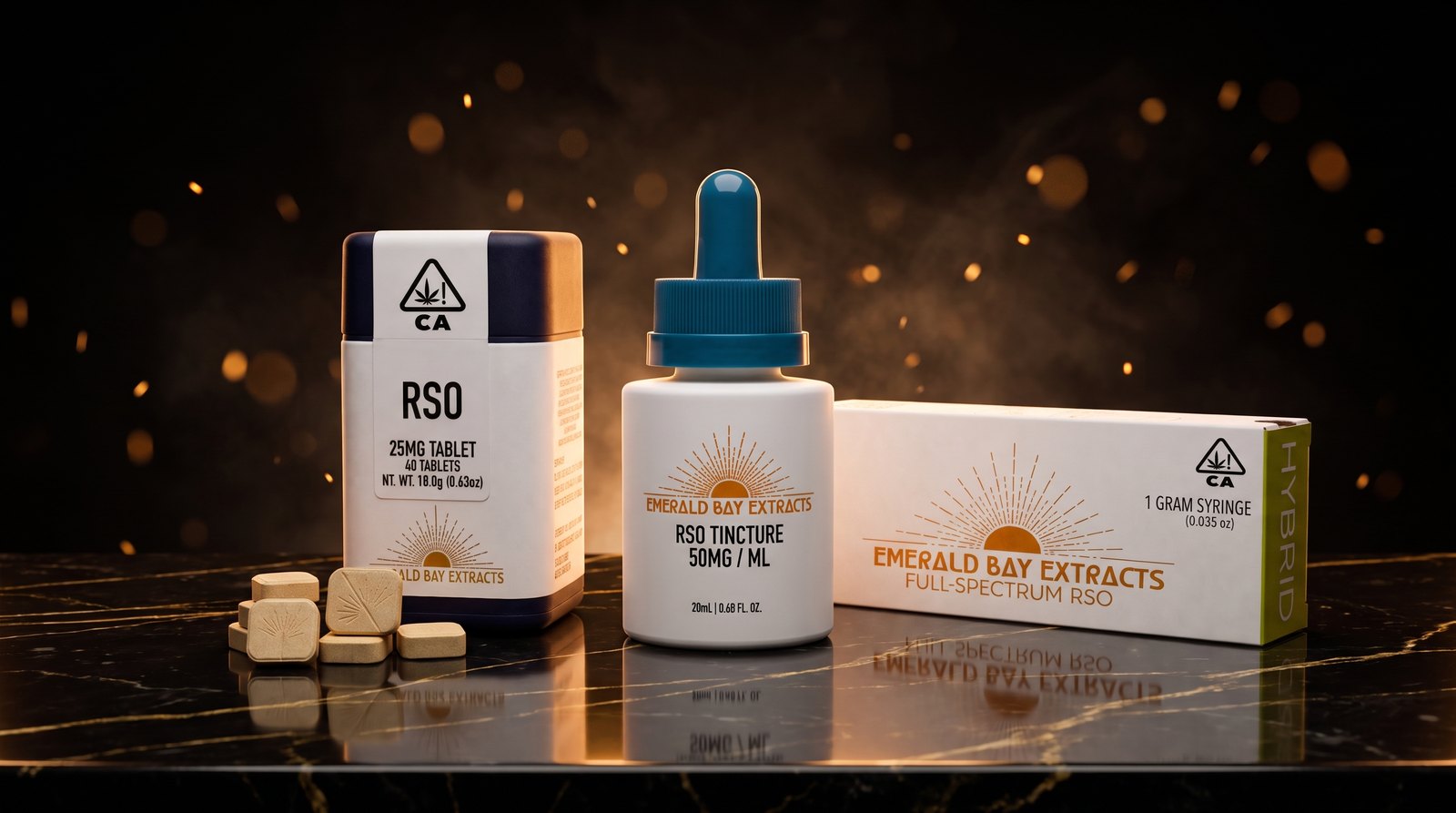
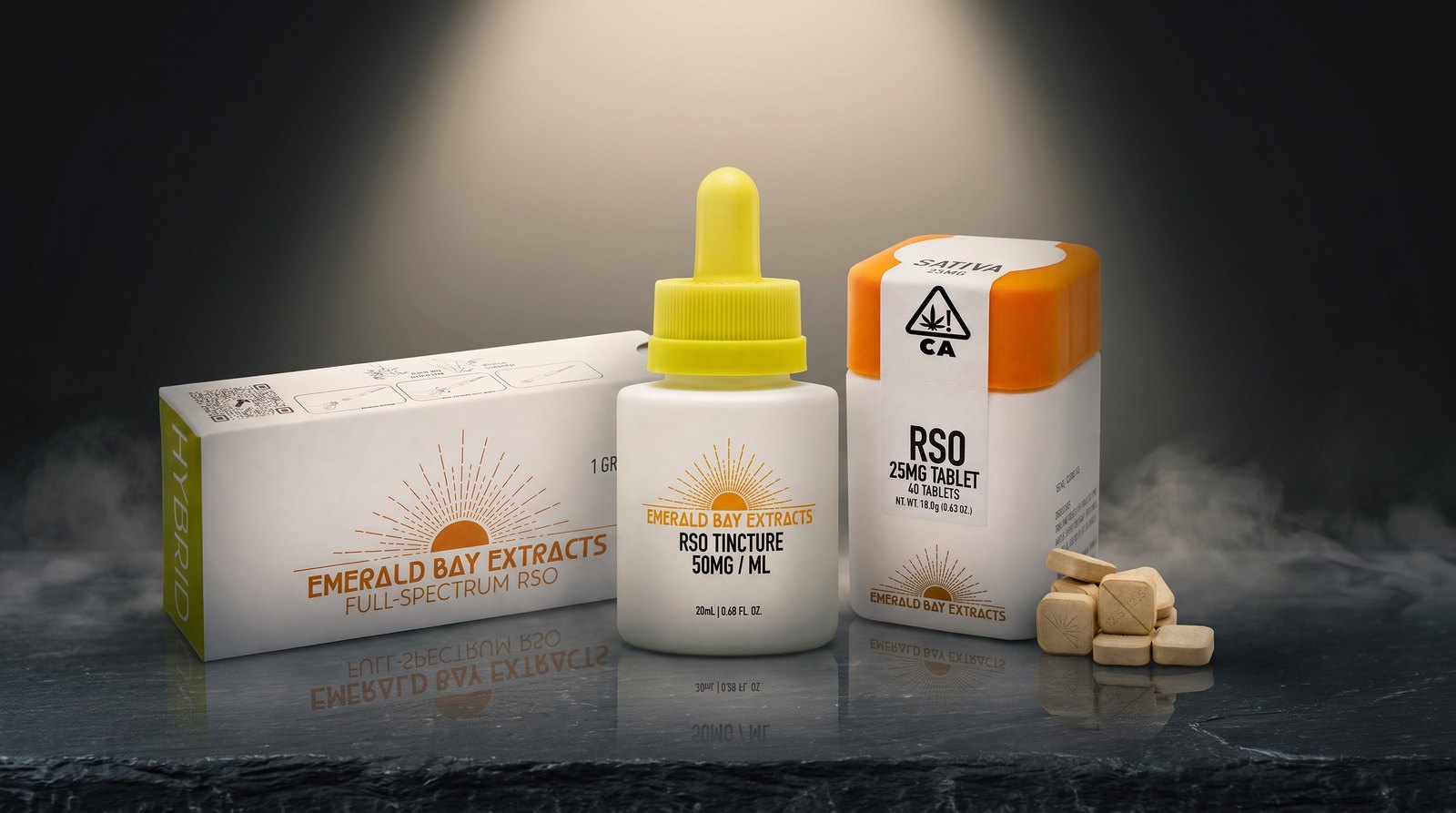
An RSO syringe asks for more of your attention than a gummy, and that's the point. It lets you choose your dose in very small steps, which matters when the oil is this concentrated and the timing is this variable. Learn your markings, start with less than you think you need, and give each dose a full 2 hours. Within a week or two most people find the routine becomes second nature. Emerald Bay's 1g THC oil syringes (RSO syringes) are strain-specific, full-spectrum, and triple lab-tested, with the batch results published for each product.
Frequently asked questions
Can you smoke RSO?
We don't recommend it. RSO is made to be taken by mouth. It's thick and tar-like, and it contains plant fats, waxes, and chlorophyll that burn harshly and taste unpleasant. Smoking it also wastes most of the oil. If you want inhaled cannabis, flower or a product designed for vaporizing is a better fit.
Can you dab RSO?
Technically you can put RSO on a dab rig, but it isn't designed for it. The same plant material that makes it full-spectrum makes it burn poorly at dab temperatures, and the smoke tends to be harsh. RSO works best swallowed, held in the mouth, or mixed into food.
Does RSO get you high?
If it contains THC, yes. THC-dominant RSO is potent, and because it's taken orally the effects tend to arrive slowly and last longer than smoked cannabis, often several hours. CBD-dominant or CBG RSO products are much less intoxicating, though CBD-dominant oils usually still contain some THC. Check the label and the lab results for the exact ratio.
What is an RSO dart?
"RSO dart" is a name some brands use for a small, pre-filled oral applicator of RSO. It's the same idea as an RSO syringe: you press the plunger, measure by the markings, and take the oil by mouth. The dosing, onset, and storage guidance in this article applies to both.
How should you store an RSO syringe?
Wipe the tip clean, screw the cap back on, and keep the syringe in its original box in a cool, dark place, out of reach of children and pets. Don't leave it uncapped, which lets the oil seep out and collect debris, and keep it out of hot spaces such as a parked car. Child-resistant storage matters: a national poison-center analysis found reported edible cannabis exposures in children under 6 rose from 207 in 2017 to 3,054 in 2021.
This article is educational and doesn't provide medical or dosing advice. Responses to oral cannabis vary widely from person to person. Cannabis is for adults 21+, laws differ by location, and cannabinoids can interact with other medications, including some blood thinners and seizure medications. Don't drive or operate machinery after taking RSO. If you're pregnant, nursing, or managing a medical condition, please talk with a healthcare provider who knows your full history before using cannabis.