“Should I get the syringe or the tablets?” is one of the most common questions at the counter. Both deliver full-spectrum RSO; they differ in how you measure and take a dose.
In this guide, get to know each product type better, learning along the way whether you’ll want to turn to syringes or tablets under various circumstances. Starting with an in-depth examination of what RSO tablets and syringes are, we’ll move on to compare the two across five different categories.
What is RSO?
RSO (Rick Simpson Oil) is a concentrated, full-spectrum cannabis extract that keeps the plant’s cannabinoids and terpenes rather than refining them down to one compound. The idea that those compounds work better together, the entourage effect, is plausible but still being studied. See what is RSO for the full explanation.
What is an RSO syringe?
An RSO syringe is a common type of RSO product in which cannabis oil is stored in a glass barrel and pushed out (extruded) with a plunger. Syringes make it possible to administer exact doses of RSO, and they also ensure that no RSO is left over in the container once empty. RSO syringes contain RSO and no other ingredients.
What are RSO tablets?
RSO tablets consist of RSO combined with an edible tablet base. Emerald Bay Extracts tablets contain three ingredients: RSO, microcrystalline cellulose and silicon dioxide, and they’re scored so you can split them. RSO tablets can be manufactured in many different doses, allowing everything from pinpoint microdosing to the administration of large amounts of RSO at once.
How do RSO syringes and tablets compare?
With a basic understanding of what syringes and tablets are in the context of RSO, it’s time to compare the two product types. Right from the start, we’ll stipulate that neither RSO syringes or tablets are inherently better than each other: Both product types offer unique benefits:
| RSO syringe | RSO tablet | |
|---|---|---|
| What’s inside | 1 g of full-spectrum RSO, nothing else | RSO, microcrystalline cellulose and silicon dioxide |
| How you measure a dose | By eye: a drop about the size of half a grain of rice to start | Printed on the package; scored for halves or quarters |
| Smallest practical dose | A sliver of oil | A quarter tablet (about 6 mg of a 25 mg tablet) |
| How you take it | By mouth, under the tongue then swallowed, or mixed into food | Swallowed, whole or split |
| Onset when swallowed | Typically 30 min–2 h | Typically 30 min–2 h |
| Best for | Flexible or larger doses, mixing into food | Consistent, repeatable doses and discretion |
For first doses of each form, see the RSO dosage chart.
How do you take an RSO syringe vs. a tablet?
The ways in which you use Emerald Bay Extracts tablets and syringes are undeniably different. In the case of syringes, you push down a plunger to extrude a dose of pure RSO, which you can then put under your tongue, swallow immediately, or add to your choice of food or beverage.
Tablets, on the other hand, consist of RSO combined with a tablet base, which you’ll quickly note makes them easy to handle and not at all sticky. Whether you chew them or swallow them whole, it’s hard to make a mess with RSO tablets, and your choices of administration methods are quite straightforward.
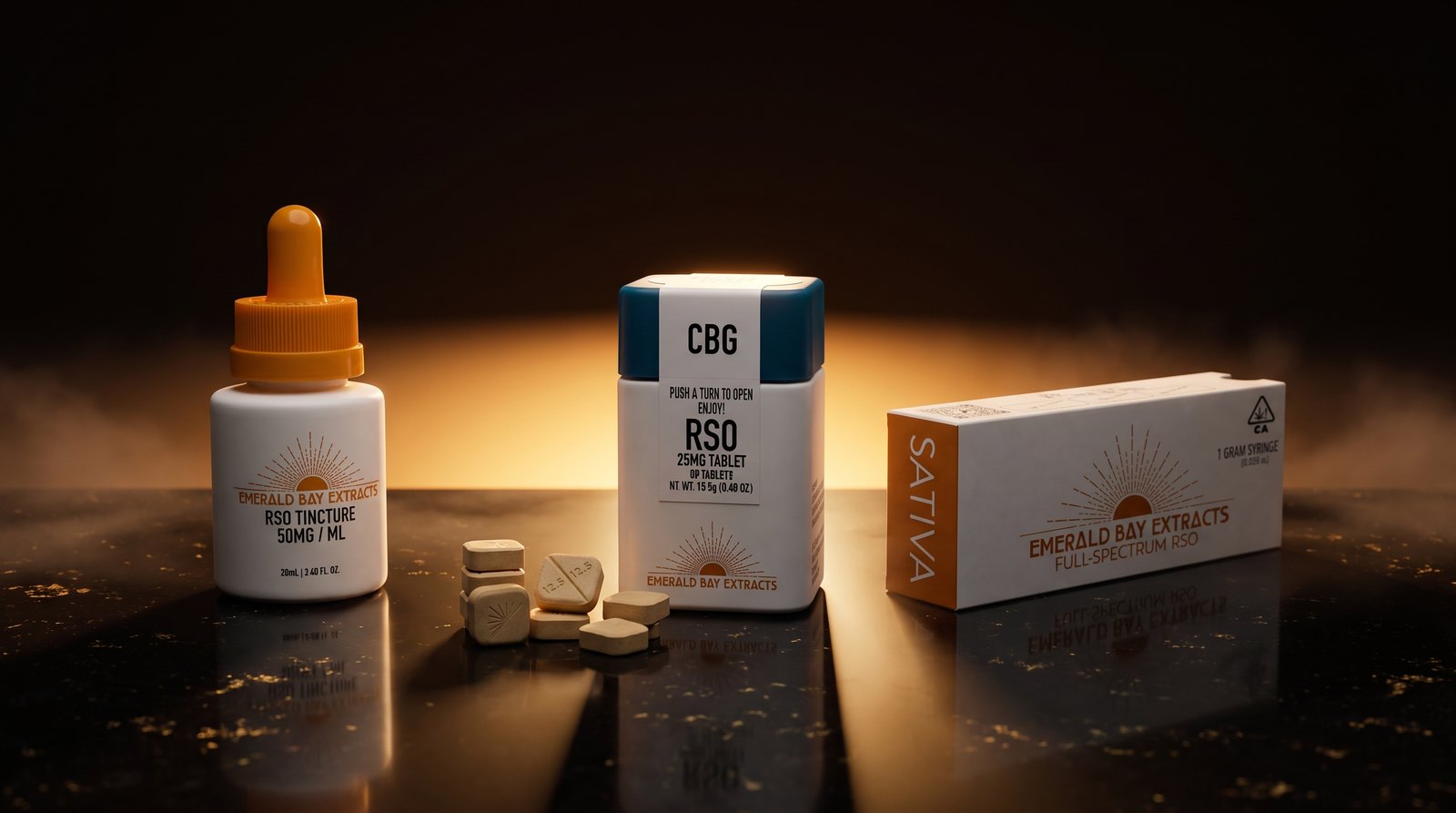
Which is easier to dose?
Tablets. The milligrams are printed on the package, and a scored tablet splits into the same half or quarter every time. A syringe holds the same kind of oil, but you measure each dose by eye, so small doses vary more from day to day. If you need doses smaller or larger than a tablet allows, the syringe is more flexible.
Do syringes and tablets feel different?
As long as they contain the same strain, the tenor or “vibe” of the effects provided by RSO tablets and syringes shouldn’t be considerably different. You might notice a difference in how fast you experience the effects of your RSO, however, depending on whether it’s contained in a tablet or a syringe.
Holding oil from a syringe under your tongue lets a little absorb through the lining of the mouth, but cannabinoids are oily and most of the dose is still swallowed. In a controlled NIH study, an oromucosal cannabis spray and oral THC capsules produced similar blood levels and timing, so expect the slow oral timeline either way.
In practice, both forms usually take 30 minutes to 2 hours to start working, with a peak around 1.5 to 3 hours. See how long RSO takes to kick in.
Which is more convenient?
All things considered, RSO tablets and syringes are equal in terms of convenience. What’s convenient to you changes depending on the circumstances, though, such as discretion being important in public but the ability to pinpoint control your dose perhaps becoming more of a priority at home.
For instance, there’s absolutely nothing about taking an Emerald Bay Extracts RSO tablet or two that will provide any indication that you’re using cannabis. Our tablet containers are small enough to fit in the palm of your hand. Because tablets can look like ordinary pills, always keep them in their child-resistant packaging.
Onlookers might be curious about what’s in a syringe you start administering into your mouth, though — curiosity you may or may not want to attract. Simply consider the demands of your situation to decide whether RSO syringes or tablets are more convenient to your current needs.
Which is more versatile?
There’s no clear winner between RSO syringes and tablets when it comes to versatility of potential administration methods. Between the two product types, there’s truly something for everyone: Those who don’t like taking RSO directly can dissolve it in a drink or add it to food. Tablets can be swallowed whole — Emerald Bay Extracts 10mg tablets are particularly small and easy to swallow while still providing an impressive dose.
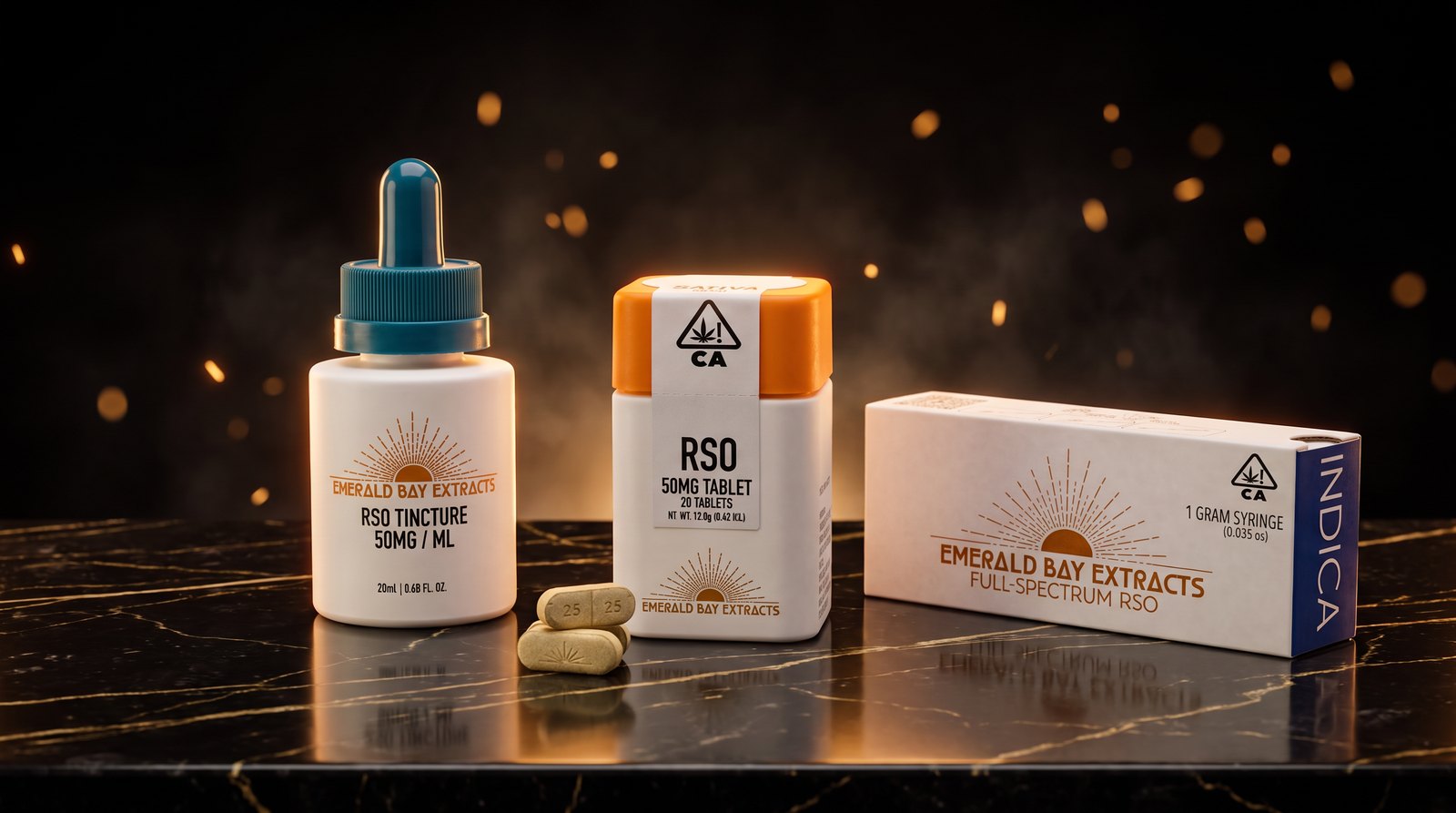
Whichever you choose, keep the same routine (time of day, food) so you can compare one dose with the next.
Should you choose RSO tablets or syringes?
With a full understanding of the differences between RSO syringes and tablets, which one comes out on top as the best type of RSO product? In the end, it’s best to think of these two product types from a “both-and” rather than an “either-or” perspective.
In some cases, absolute discretion may be tantamount, in which case taking a couple of tablets out of a small personal bag might make a lot of sense. In other cases, you might want to mix a measured amount into food: that’s where a syringe helps.
When it comes to RSO tablets and syringes, each product has benefits that the other does not. Both deliver the same full-spectrum RSO, and both are sold only at licensed dispensaries in California and New Mexico (in New Mexico, as a 20 mg tablet).
RSO tablets vs. syringes FAQ
Further expand your understanding of the differences and similarities between RSO tablets and syringes in the following FAQ section:
How long will a syringe of RSO last?
Emerald Bay Extracts RSO syringes contain 1g RSO extract, which will last varying amounts of time depending on use habits. Those who like to use 100mg of RSO per day or more, for instance, will find that their syringes become depleted after around a week and a half. Use a smaller dose, however, and your RSO may last its entire shelf life of one year.
Are RSO tablets the same as capsules?
No. Capsules hold oil inside a gel shell and can’t be split. Scored tablets can be halved or quartered, which makes small doses easier. We compare them side by side in RSO tablets, pills and capsules.
How quickly do you feel the effects of RSO?
Swallowed RSO, from a syringe or a tablet, typically takes 30 minutes to 2 hours to start working, with peak effects around 1.5 to 3 hours. Holding oil under the tongue may help a little, but most of the dose is still swallowed. Wait at least 2 hours before taking more.