This article is educational and doesn’t provide medical or dosing advice. Cannabis affects people differently, laws vary by location, and age restrictions apply. If you take other medications or are pregnant or nursing, please talk with a healthcare provider before using cannabis.
The short answer
RSO stands for Rick Simpson Oil. It’s a thick, dark, full-spectrum cannabis extract made by pulling the oil out of whole cannabis flower with a solvent and then removing that solvent. What’s left is concentrated: it keeps THC (or CBD and CBG, depending on the plant) along with the minor cannabinoids and terpenes of the strain it came from. Most people take RSO by mouth, from a syringe, as a tablet or capsule, or mixed into food. Taken that way, effects usually begin 30–90 minutes after a dose, peak around 2–3 hours, and can last 4–12 hours.
That’s the skimmable version. The more useful version explains where the name comes from, what “full-spectrum” actually means, why swallowed cannabis behaves so differently from smoked cannabis, and what the research does and doesn’t support. Let’s walk through it.
Where the name comes from
Rick Simpson is a Canadian who began making and giving away a homemade cannabis oil in the early 2000s. He has said publicly that he used it on his own skin cancer, and his story spread widely online. Those accounts are personal anecdotes. They haven’t been verified in clinical studies, and it’s worth being precise about what that means.
The National Cancer Institute’s professional summary on cannabis notes that highly concentrated THC or CBD oil extracts have not been evaluated in any clinical trials for anticancer activity or safety. The U.S. Food and Drug Administration states that it has not approved cannabis for the treatment of any disease or condition; its approvals cover a purified CBD medicine and synthetic THC-related drugs, not plant extracts.
So the name is history, not a promise. Today “RSO” describes a type of product (a whole-plant, concentrated, usually oral cannabis oil), and that’s how we use the term. As a company founded by an oncology nurse, we think people deserve that distinction stated plainly.
How RSO is made
The basic process is simple to describe and much harder to do well.
Extraction. Cannabis flower is soaked or washed in a solvent that dissolves the plant’s resin: its cannabinoids, terpenes, and other oils. Simpson’s original home method used solvents that are flammable and unsafe in a kitchen. Licensed manufacturers work with lab equipment under state rules, and food-grade ethanol is a common choice.
Solvent removal. The plant material is filtered out and the solvent is evaporated, leaving a concentrated oil. In a regulated market, finished products are tested by an independent lab for potency and for contaminants, including residual solvents.
Activation (decarboxylation). Raw cannabis contains mostly acidic cannabinoids such as THCA, which don’t produce THC’s familiar effects. Heat converts them to their active forms. Researchers have mapped how temperature and time drive this conversion for THCA, CBDA and CBGA, which is why a properly made RSO is active when swallowed.
What RSO doesn’t go through is the refinement step that strips the oil down to a single compound. That’s the whole point.
A practical note: making RSO at home involves flammable solvents and guesswork about potency. We don’t recommend it. Licensed, lab-tested products exist so that you know what’s in the oil and how much.
RSO vs. distillate vs. tinctures
These three terms get used loosely, so here’s how they differ.
RSO (full-spectrum)
Whole-plant oil, kept as close to the plant’s natural profile as possible. It carries THC or CBD alongside minor cannabinoids (CBG, CBN, CBC and others) and terpenes in roughly the proportions the strain produced. It’s thick, dark, and strong-tasting.
Distillate
Oil that’s been refined further, usually to 85–95% of a single cannabinoid. Terpenes and minor cannabinoids are largely removed, and some products add flavors or terpenes back afterward. Distillate is consistent and inexpensive, which is why it’s the base of most gummies and vape cartridges.
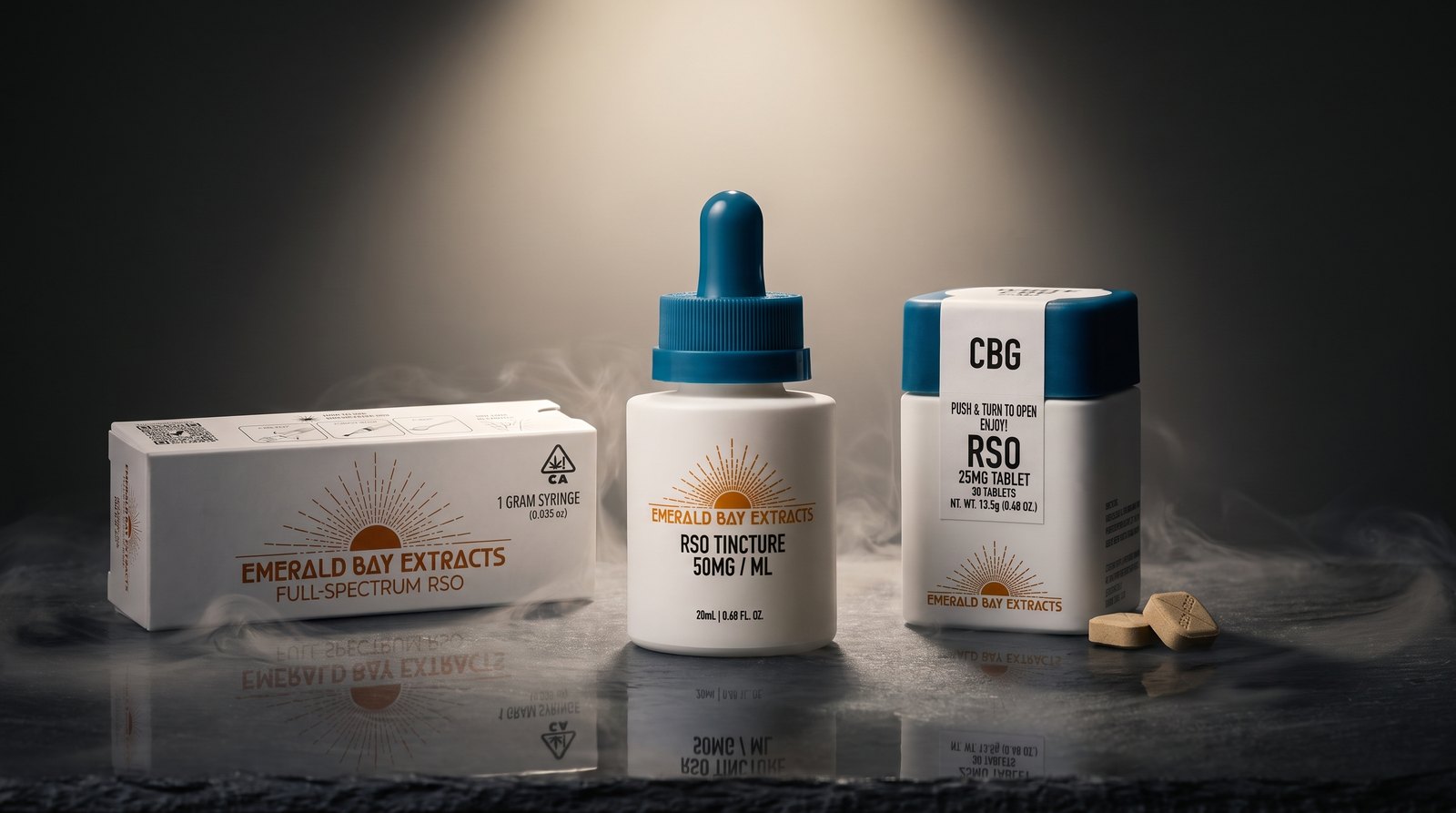
Why might the difference matter? The “entourage effect” hypothesis proposes that cannabinoids and terpenes may work differently together than in isolation. It’s plausible and widely discussed, but it’s still a hypothesis: controlled human research comparing full-spectrum and isolated products is limited. We make full-spectrum RSO because we think it’s the more complete way to take the plant, not because the science is settled. For a deeper comparison, see the difference between distillate, live resin and RSO.
Tinctures
“Tincture” describes a format, not an extract type. A tincture is a liquid you measure with a dropper or oral syringe, taken under the tongue or added to food. It can be made from distillate, isolate, or full-spectrum oil. A full-spectrum RSO tincture is simply RSO in a measurable liquid form.
The forms RSO comes in
Syringes. The traditional format. A 1-gram syringe lets you push out small amounts of oil, commonly starting with a drop about the size of a grain of rice. Graduated markings help with consistency. Our RSO syringe guide covers warming, measuring and storage step by step.
Tablets. RSO in a pre-measured, swallowable dose. Tablets remove the guesswork of eyeballing a sticky oil, and scored tablets can be split to take a half or a quarter.
Capsules. Oil sealed inside a gelatin or plant-based shell. Capsules are measured like tablets but generally can’t be split.
Tinctures. A liquid format for people who want fine control over the amount.
All of these are usually swallowed, which means they share the same basic timing. That’s where the biology gets interesting.
How long RSO takes to work, and why
When you inhale cannabis, THC reaches the bloodstream through the lungs within minutes. When you swallow it, the trip is longer. A classic pharmacology review describes oral THC effects that set in after 30–90 minutes, peak at 2–3 hours, and last about 4–12 hours, depending on dose and the effect being measured.
Three things explain that slower, longer curve:
- Absorption through the gut. Cannabinoids are fat-soluble and absorbed unevenly in the digestive tract. Oral THC has low and variable bioavailability compared with inhalation.
- First-pass metabolism. Swallowed THC passes through the liver before it reaches the rest of the body. Liver enzymes (primarily CYP2C9 and CYP3A4) convert part of it to 11-hydroxy-THC, an active metabolite. This is one reason oral cannabis can feel different from smoked cannabis at a similar dose.
- Food. What’s in your stomach matters. In a controlled study, THC exposure was substantially different after a high-fat meal than on an empty stomach, with differences between men and women as well.
The practical consequence: the same RSO tablet can feel different from one day to the next, and from one person to another. That isn’t a flaw in the product. It’s how human digestion and metabolism work. We go deeper on this in How long does RSO take to kick in?
Dosing: start low, go slow
We can’t tell you what dose is right for you, and anyone who claims to without knowing your history is guessing. What we can explain is why caution matters more with RSO than with most cannabis products.
RSO is concentrated. A full gram of oil can contain several hundred milligrams of THC, depending on the strain and batch. Because oral effects are delayed, the most common mistake is taking more after an hour because “nothing is happening,” and then feeling both doses arrive together.
That’s more than an inconvenience. A study of emergency department visits in Colorado found that edible cannabis accounted for a disproportionate share of cannabis-related visits relative to its share of sales, and those visits were more often for acute psychiatric symptoms, intoxication and cardiovascular symptoms than visits linked to inhaled cannabis.
The general principles people use with oral cannabis:
- Start with the smallest practical amount: a rice-grain drop from a syringe, or a quarter or half of a low-dose tablet.
- Wait at least two hours before considering more.
- Keep a short note of the amount, time, and what you ate, so you can adjust with information instead of memory.
- Don’t drive or do anything that requires full attention after a dose.
Is RSO legal?
It depends on where you are. In California, adults can buy cannabis if they’re 21 or older, or 18 and older with a physician’s recommendation for medicinal use, and every legal retailer holds a license from the state Department of Cannabis Control. Licensed products have been tested by a licensed lab; unlicensed sellers may offer untested products.
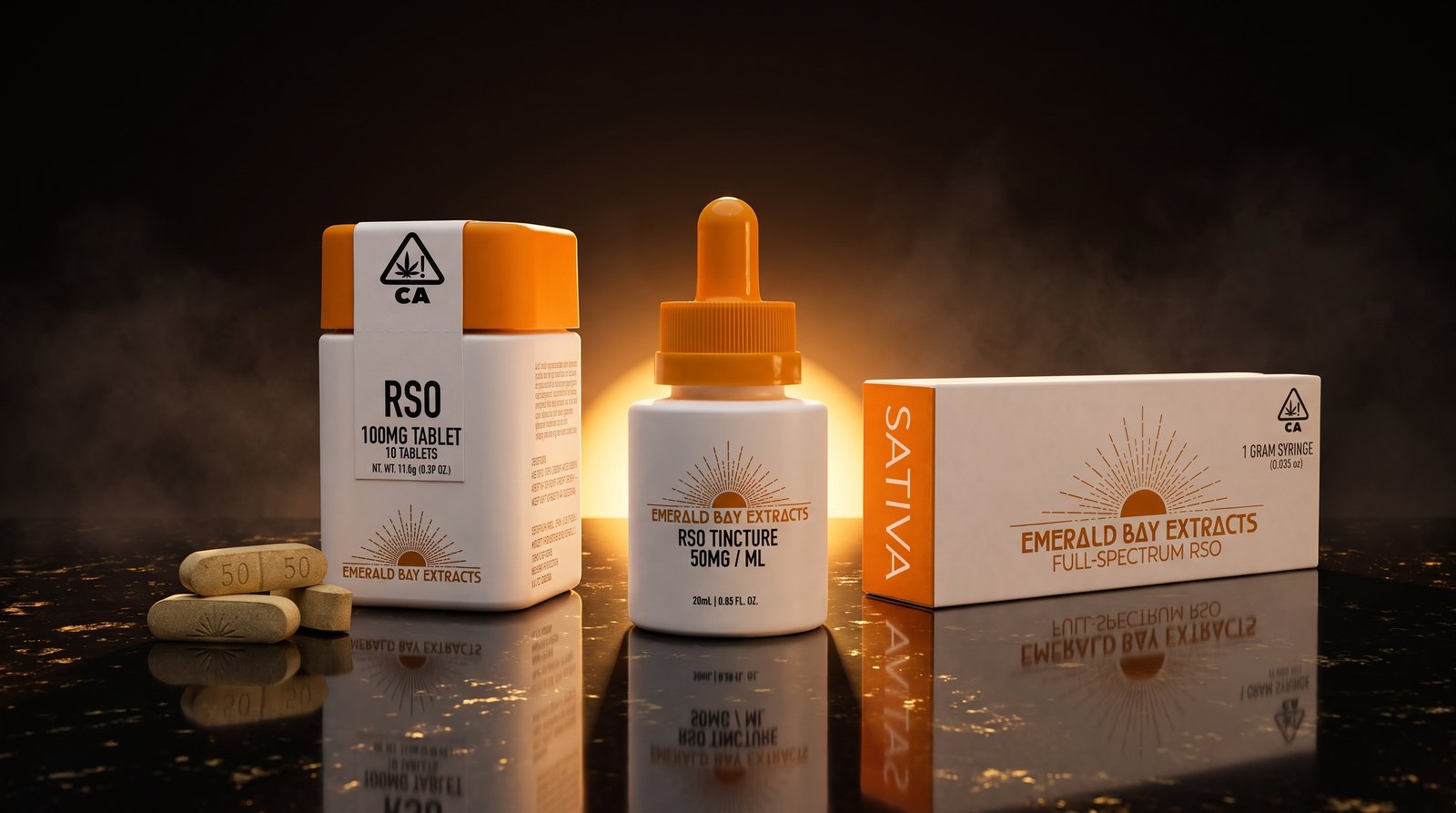
RSO is not legal everywhere, and cannabis remains federally controlled in the U.S. You can’t lawfully ship THC products across state lines, so RSO bought online from out of state is a warning sign, not a convenience. Emerald Bay products are sold only through licensed dispensaries. We don’t sell online.
Safety and medication interactions
RSO is generally well tolerated by many adults at appropriate doses, but “natural” doesn’t mean free of risk. The most commonly reported short-term effects of THC include drowsiness, dizziness, dry mouth, a faster heart rate, and, at higher doses, anxiety or paranoia.
Interactions deserve particular attention. Both THC and CBD are processed by the same liver enzyme families that handle many prescription drugs. A clinical review of CBD found potential interactions with a range of medications, including certain blood thinners, antidepressants and anti-seizure drugs. If you take any prescription medication, ask your pharmacist or prescriber before adding RSO. That conversation is short and genuinely useful.
A few other considerations:
- Pregnancy and nursing: cannabis use isn’t recommended.
- Storage: RSO, especially in tablets, can look like ordinary food or medicine. Store it locked and out of reach of children and pets.
- Alcohol and sedatives: combining them with THC can intensify impairment.
- Heart conditions or a history of psychosis: discuss THC with your clinician first.
Frequently asked questions
Does RSO get you high?
THC-dominant RSO does. It’s a concentrated THC product, and swallowed THC can feel stronger and last longer than people expect. RSO made from CBD- or CBG-dominant plants is much less intoxicating, though it may still contain some THC. The product label and certificate of analysis tell you the ratio.
Is RSO the same as cannabis oil or CBD oil?
Not quite. “Cannabis oil” is a broad term. Most CBD oils are made from hemp and contain little THC, often diluted in a carrier oil. RSO is a concentrated, full-spectrum extract that is usually THC-rich unless it’s made from a CBD or CBG strain.
Can RSO cure cancer?
No clinical evidence shows that it can. The National Cancer Institute notes that concentrated cannabis oils haven’t been evaluated in clinical trials for anticancer activity or safety. Some people with cancer use cannabis, alongside their care team, for quality-of-life reasons. That is a conversation to have with your oncology team, never a substitute for treatment.
How long does RSO last in a syringe or tablet?
Stored cool, dark, and sealed, RSO is relatively stable, though cannabinoids slowly degrade with heat, light and air over time. Follow the date and storage guidance on your package.
Where can I buy RSO?
Only from a licensed dispensary in a state where cannabis is legal. In California, look for the dispensary’s state license, and ask to see lab results for the batch. You can find Emerald Bay products through our store locator and review every batch’s certificate on our lab results page.
The takeaway
RSO began as one man’s homemade remedy and became a product category. Strip away the folklore and what remains is useful on its own terms: a concentrated, whole-plant cannabis oil with a slow, long-acting profile when swallowed. Understanding that profile (the delay, the variability, the interactions) matters more than any single claim about what RSO can do.
If you choose to try it, Emerald Bay makes strain-specific, full-spectrum RSO in tablets, 1-gram syringes and tinctures, triple lab-tested with a certificate for every batch, sold at licensed California dispensaries.